

AT&T Stadium is a unique venue located just outside Dallas in Arlington. Since its completion on May 27, 2009, it has served as the home of one of American sports’ most iconic teams, the Dallas Cowboys. Beyond Cowboys games, the stadium also hosts the Cotton Bowl Classic, the Big 12 Championship Game, and the Southwest Classic. Read more on dallas-future.
It fully replaced Texas Stadium, which hosted most events from 1971 through 2008.
Visitors say the stadium resembles a digital projection, as if a hologram has materialized before your eyes. According to them, Arlington’s skyline will never look the same again, now capped by a massive white dome. It stands out against the vivid blue Texas sky and the sprawling city below.
AT&T Stadium, or “Jerry World”
Often called “Jerry World,” the stadium’s nickname honors Jerry Jones, owner of the Dallas Cowboys and the driving force behind its construction. Jones initially envisioned a large entertainment complex for Arlington, but the project soon exceeded even his grandest expectations.
AT&T Stadium comfortably seats 80,000 fans but can be reconfigured to fit over 100,000 with standing-room only. This flexibility makes it the largest stadium by capacity in the National Football League. In 2009, it set a regular-season attendance record when 105,121 spectators packed the venue.
Cost of One of the World’s Most Expensive Sports Venues
The initial budget for the new stadium was roughly $650 million, but final costs surged to $1.15 billion, making it one of the most expensive sports facilities in history. To help cover expenses, the Arlington city council approved a 0.5% increase in the sales tax, a 2% rise in the hotel occupancy tax, and a 5% hike in the car rental tax. While the measures faced early pushback, the finished stadium continues to leave visitors in awe.
The Unique Design of AT&T Stadium
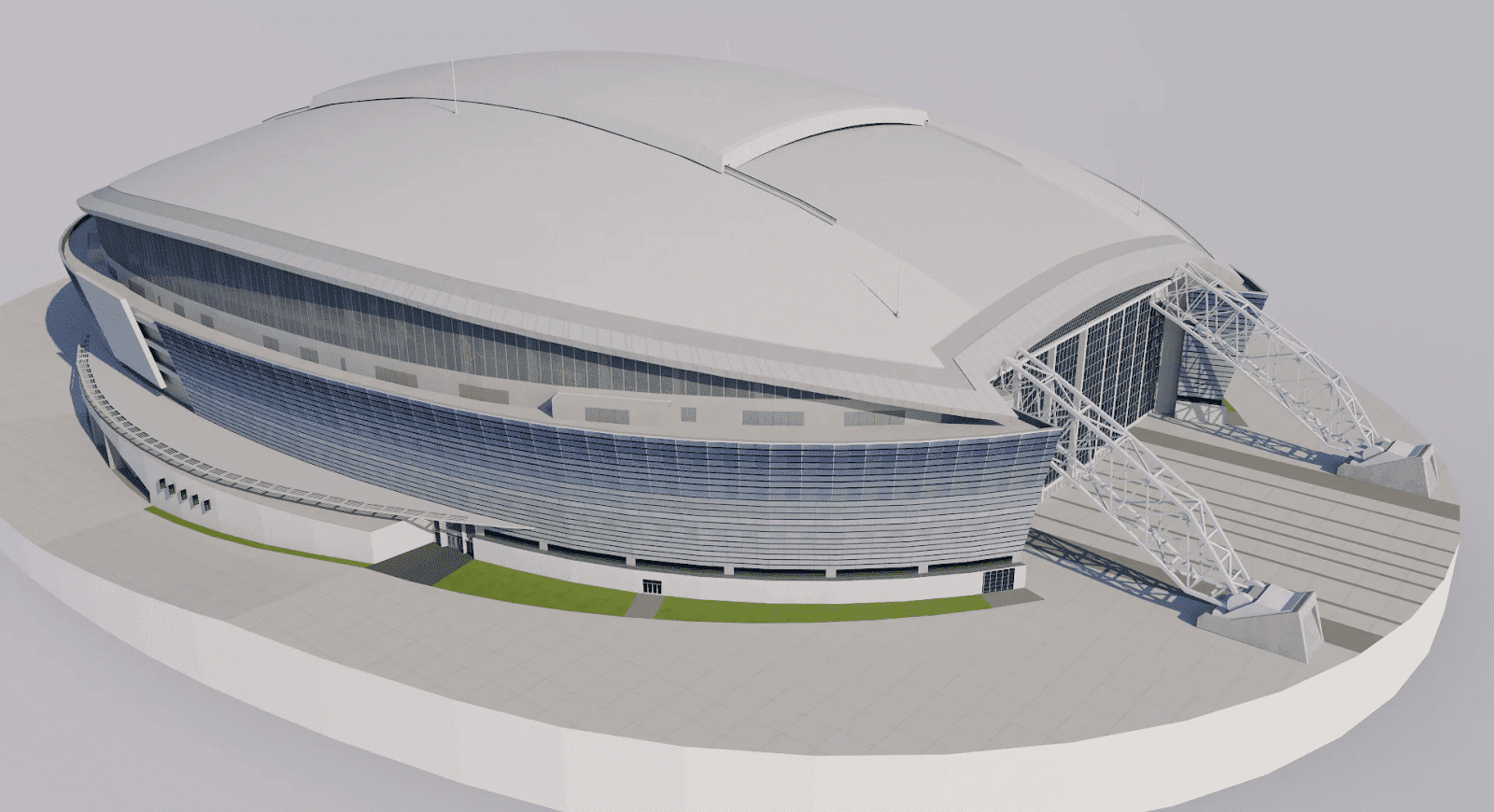
Lead architect Brian Trubey of HKS Architects aimed to create more than just a sports arena—it had to feel like a community landmark. The stadium’s most striking structural feature is two massive arches, each nearly 300 feet tall, that span the length of the roof. These arches are not only among the tallest of their kind in the world but also a defining element of the stadium’s silhouette.
The stadium also features expansive glass doors, fabricated by Dallas-based Haley-Greer Glass Systems. These doors open both end zones to allow seamless access and provide natural ventilation.
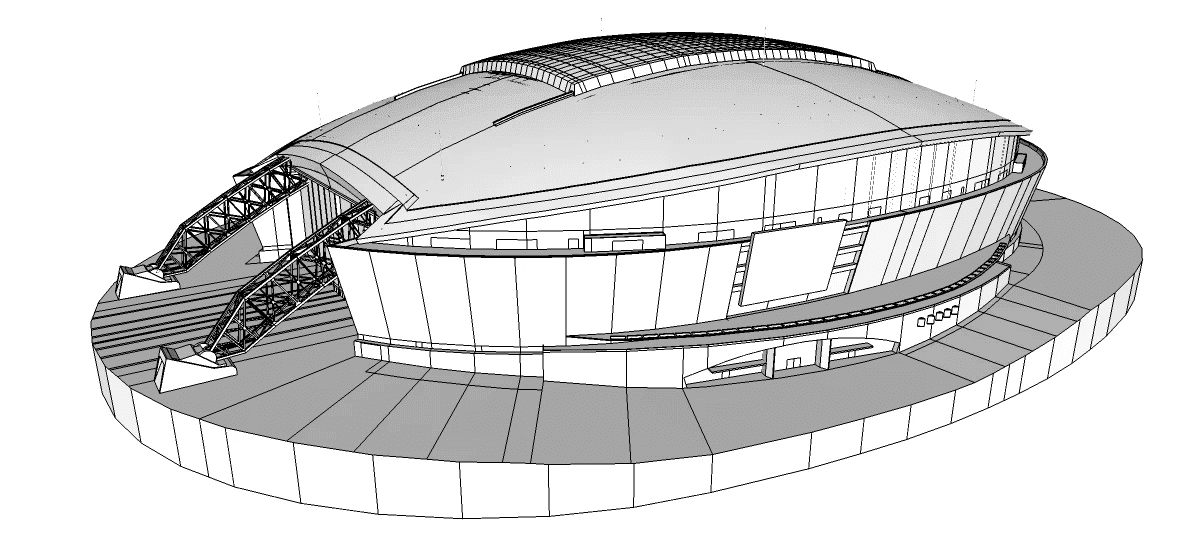
Attention to the roof’s design resulted in a retractable structure engineered by Walter P Moore, mechanization by Uni-Systems, and electrification by VAHLE Inc. The roof opens and closes based on weather conditions or event requirements and echoes the iconic open ceiling of the old Texas Stadium.
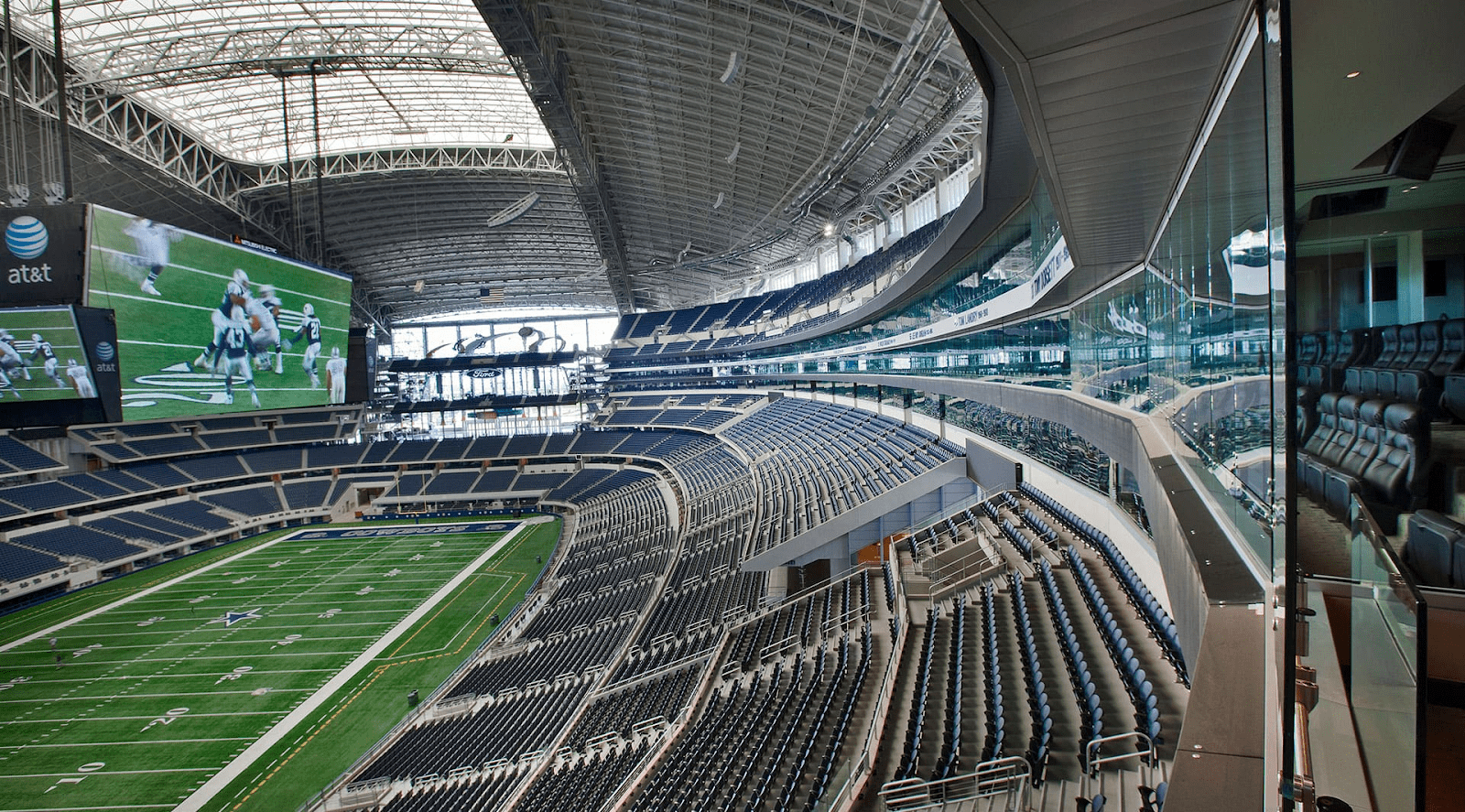
The playing field itself uses a SoftTop Convertible Turf system developed by Hellas Construction, consisting of 26 interchangeable panels. Like the retractable roof, this system allows the stadium to transition quickly from football to basketball, motor sports, concerts, and more.
Did the Chief Architect Consider Every Detail?
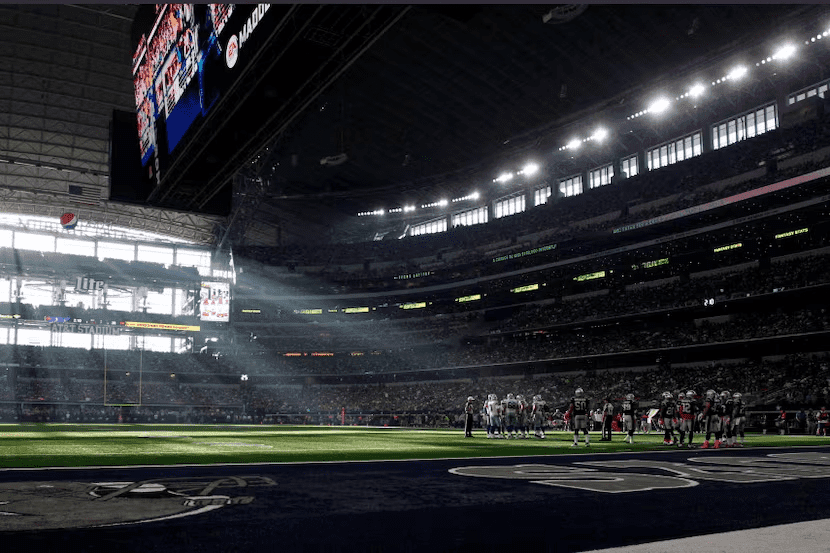
Shortly after opening, some Cowboys players complained that the afternoon sun made it hard to follow the ball. Architect Brian Trubey insists this wasn’t an oversight but an intentional feature: the open end zones transform the space from an enclosed stadium to an open-air arena.
Others note Trubey’s broader goal was to enhance the value of the surrounding land. Future high-rises will eventually block direct sunlight, solving the glare issue naturally over time. Owner Jerry Jones supports this view, calling the sun’s impact “minimal and temporary,” though some players and critics remain unconvinced.
Fascinating Facts About AT&T Stadium’s Architectural Features
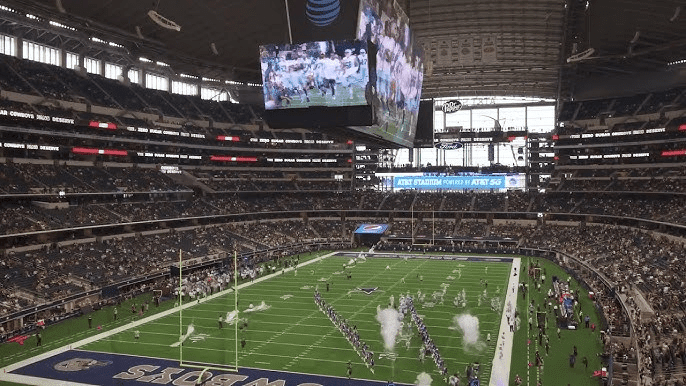
Technically, AT&T Stadium is the largest air-conditioned room on the planet. Its climate-control system maintains comfortable temperatures and humidity levels, ensuring a pleasant experience regardless of Texas’s outdoor heat.
The stadium boasts the world’s largest retractable glass doors, each measuring 180 feet (55 meters) wide and 120 feet (37 meters) high. Fully opening or closing these doors takes about 18 minutes.
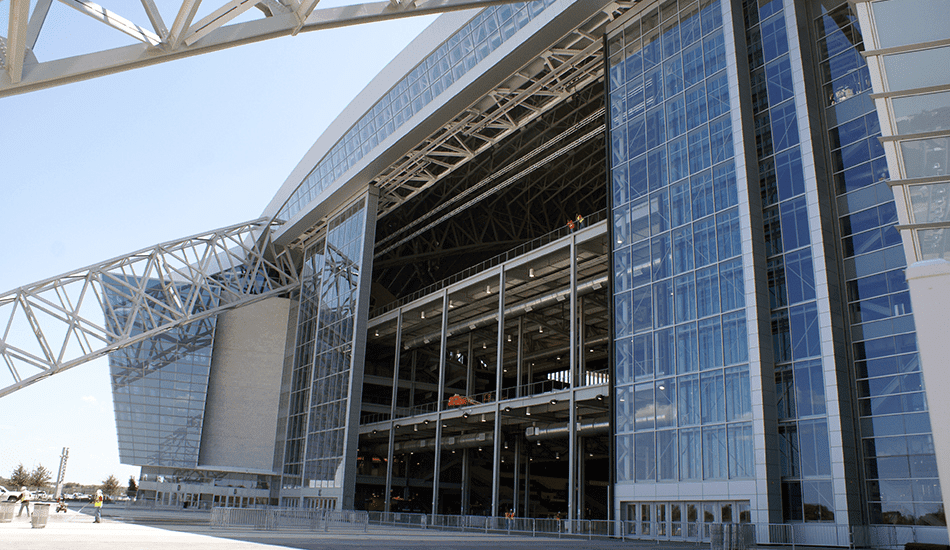
Construction began in April 2006 and finished in May 2009—just three years for a project of this scale, complexity, and size.
Sources
- https://www.dallasnews.com/sports/cowboys/2017/11/23/architectural-expert-sun-issues-don-t-stem-from-building-flaw-in-cowboys-stadium/
- https://www.beck-technology.com/blog/how-did-they-build-that-dallas-cowboys-stadium
- https://www.hksinc.com/what-we-do/projects/att-stadium/