
Dallas stands at the epicenter of a global transformation in commercial real estate. As of February 2026, the city, traditionally revered as the “capital of office towers” in Texas, is demonstrating a radical adaptation to the hybrid work model. While aging business centers struggle with record vacancy rates, the new skyscrapers of Downtown and Uptown are evolving into multifunctional “vertical villages.” Here, an office is no longer just a desk and a chair; it is an ecosystem that integrates luxury apartments, high-end fitness centers, and the digital infrastructure of the future, compelling investors to pour billions into revitalization and conversion projects.
In the article below on dallas-future.com, you will discover how Dallas is converting its legendary office towers into multifunctional housing. Why billion-dollar investments are now targeting hybrid ecosystems instead of traditional cubicles, and which specific Downtown skyscrapers have become leaders in the radical transformation of commercial real estate in the remote work era.
A Second Life for Skyscrapers
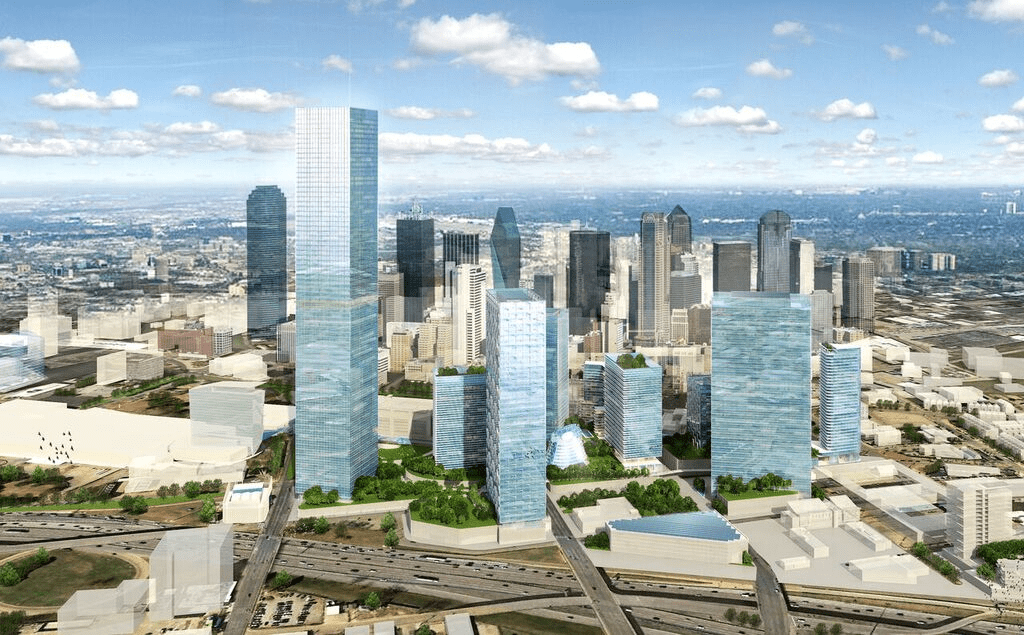
The most resonant architectural trend in Dallas has been the massive reimagining of Downtown’s “concrete giants.” While other U.S. metropolises are merely debating the crisis of vacant commercial spaces, Dallas has officially become the national leader in Office-to-Residential conversion. This is not just a renovation; it is a complete architectural mutation that saves the city center from becoming a “museum of empty chairs.”
From Cubicles to Living Rooms: The Cases of Bryan Tower and Santander Tower
Bryan Tower and Santander Tower are no longer just corporate addresses; they are prestigious residential hubs that have integrated hundreds of apartments into former office zones. The process of “implanting” residential life into these iconic structures required radical engineering solutions. The primary challenge lay in the immense “depth” of office floor plates, where central zones typically lack windows. Architects solved this by transforming the building’s core into communal lounge areas, state-of-the-art gyms, and tech hubs, reserving the panoramic perimeters for apartments with stunning views of the Skyline.
As a result, Downtown has finally broken the curse of being a “ghost district.” It now remains vibrant, illuminated, and safe even after 5:00 PM, long after the last clerks have left their workstations.
A Lifeline for Class B Building Owners
For structures built in the 1970s and 80s, classified as Class B, conversion has become a matter of survival. These buildings hopelessly lose the competition for major tenants against Uptown’s new glass towers, yet they possess ideal locations and robust structural frames. Instead of maintaining half-empty corridors and incurring losses, owners are choosing the path of total transformation. This allows them to avoid bankruptcy and turn an outdated asset into high-demand housing in the city center, where Dallas continues to see consistently high demand.
Zoning Revolution
Dallas’s success would have been impossible without the proactive stance of the municipality. The City Hall took unprecedented steps to simplify bureaucratic mazes. By swiftly updating zoning regulations and implementing tax incentives, officials made the conversion process highly attractive to developers. This strategy allows the city to kill two birds with one stone: populate the center with permanent residents and provide the market with both luxury and affordable housing without constructing new buildings on scarce land.
The Trophy Tower Effect
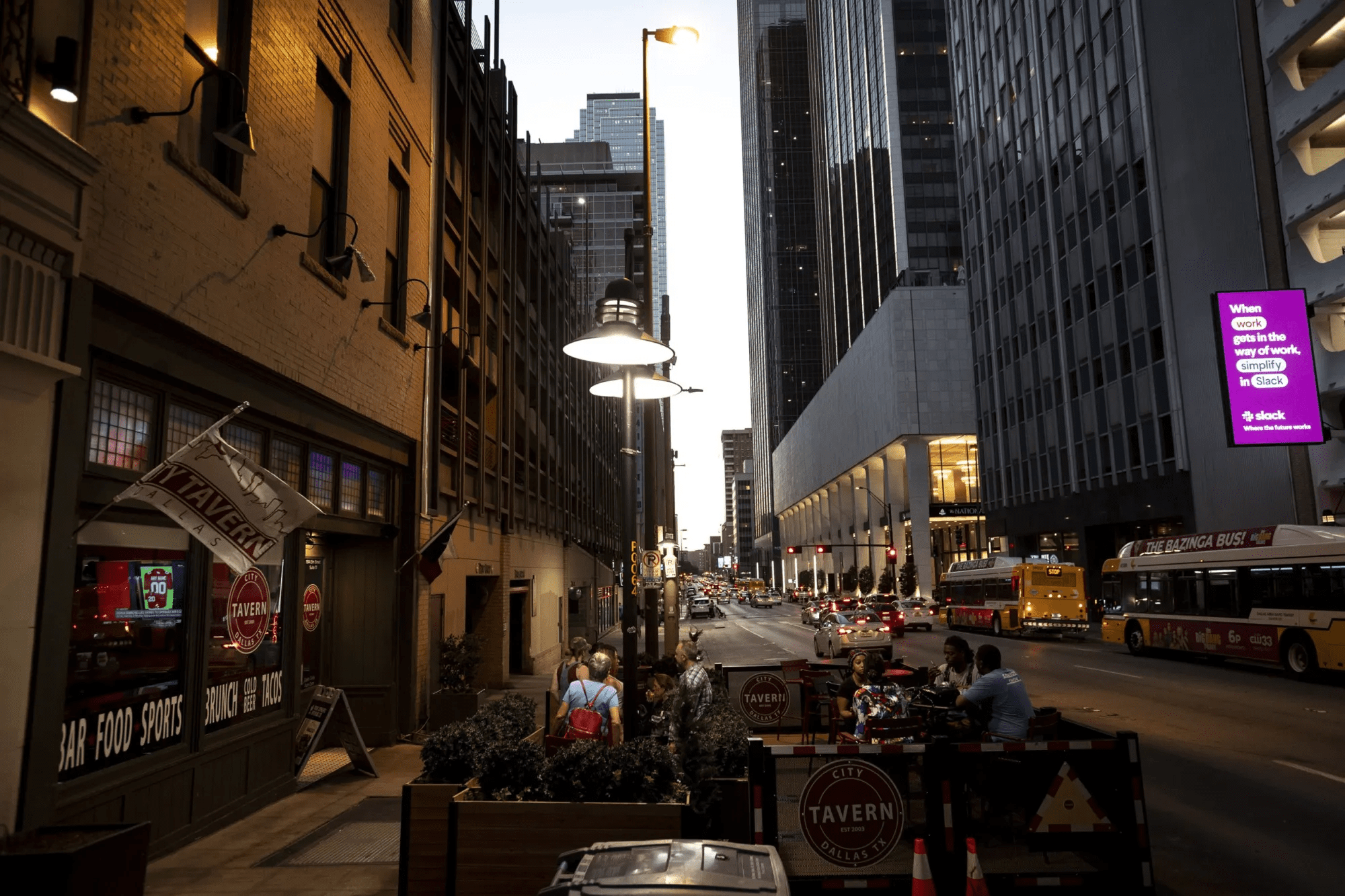
Despite the popularity of remote work, the demand for “Class A+” offices (so-called trophy buildings) in Dallas is only growing. Companies are reducing their total footprint but demanding maximum quality, creating a shortage in the most prestigious locations.
- Bank of America Tower (Parkside). This Uptown skyscraper has become the gold standard through its integration with urban space. The building offers direct access to Klyde Warren Park, private terraces on upper levels, and a Sky Lobby on the 12th floor. Special attention is paid to safety: touchless elevator and door control systems have been implemented, alongside air filtration systems with MERV 13 filters and UV purification, meeting medical standards for infection control.
- Hyper-Amenities. Modern towers, such as Santander Tower and new developments in Victory Park, offer infrastructure that goes far beyond work. This includes professional podcast recording studios, full-service concierges for personal employee errands, and unique athletic venues—such as the world’s highest pickleball court on the 48th floor (Tower Club). The culinary scene is represented by next-generation food halls and restaurants helmed by chefs with experience in Michelin-starred establishments.
- Sustainability (ESG). LEED Gold certification has become the baseline standard for major corporations choosing a headquarters in Dallas. Companies are required to report on sustainability, so they select buildings with integrated energy modeling, solar panels, and water consumption optimization sensors. Properties lacking high scores in LEED or Energy Star rankings face a “brown discount”—a rapid decline in value and an exodus of tenants toward eco-neutral “green” skyscrapers.
The Hybrid Hub
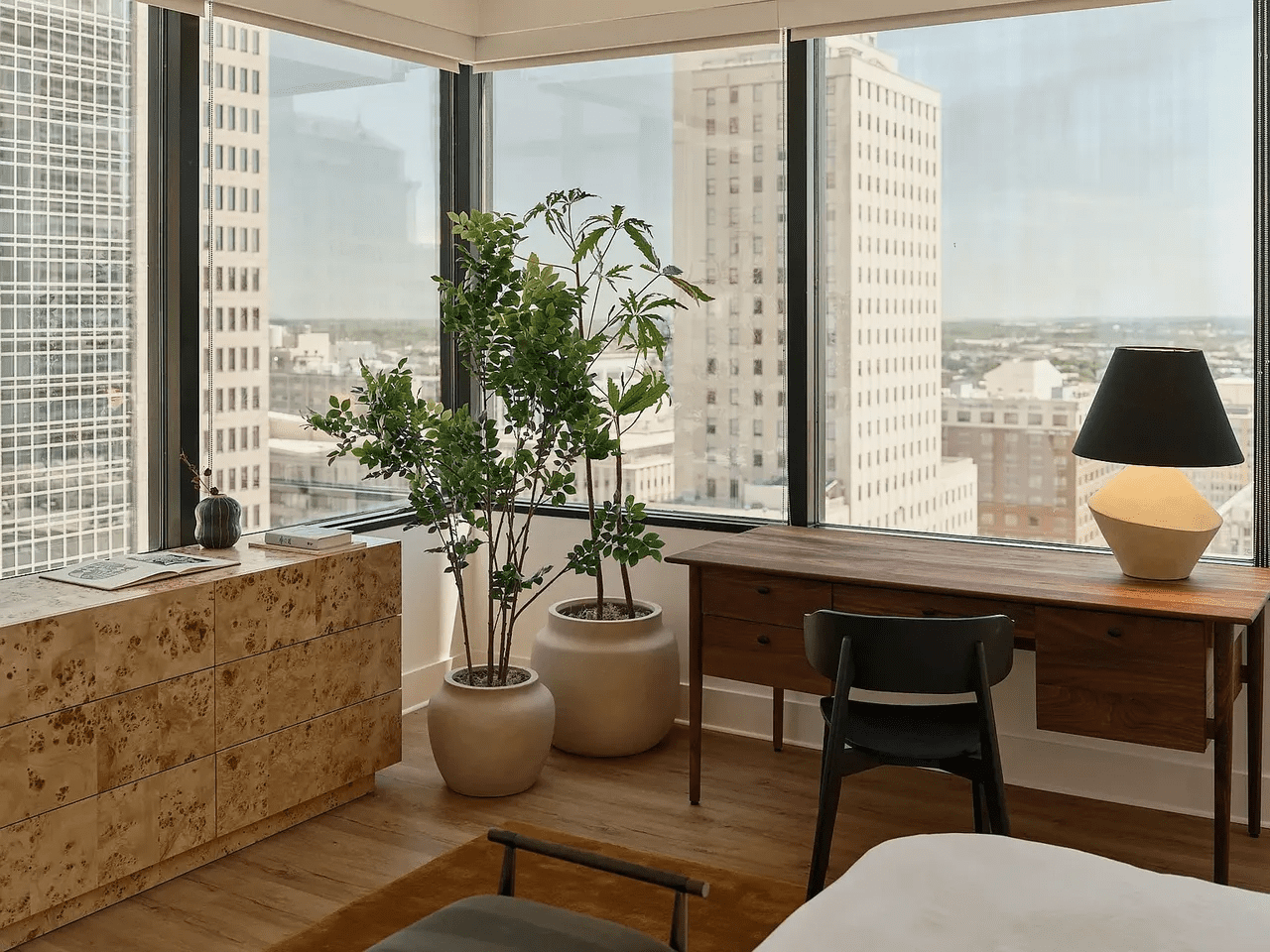
Dallas skyscrapers have officially ceased to be just “boxes with workspaces.” They are transforming into high-tech nodes where the line between physical presence and digital space becomes nearly invisible.
- Holographic Meeting Rooms. Premium office towers in the city are introducing holographic meeting rooms. This is no longer science fiction: remote workers or partners from another continent “appear” at the table in life-size form. The technology allows for the reading of non-verbal cues and facial expressions, making communication much more effective than standard video calls.
- Smart Elevators and Integrated Apps. Managing life within the building is now centralized in a single smartphone. A unified app allows you to automatically call an elevator that already knows your floor, book a parking spot with an EV charger, or individually adjust lighting intensity and temperature directly over your desk.
- Coworking as a Service. Major market players, such as Brookfield or Cushman & Wakefield, have radically changed their approach to leasing. They now offer their own coworking networks directly within the building’s structure. This provides corporations with unprecedented flexibility. A company can lease a smaller primary office but instantly scale workspaces for project teams within the same tower as needed.
Uptown vs. Downtown
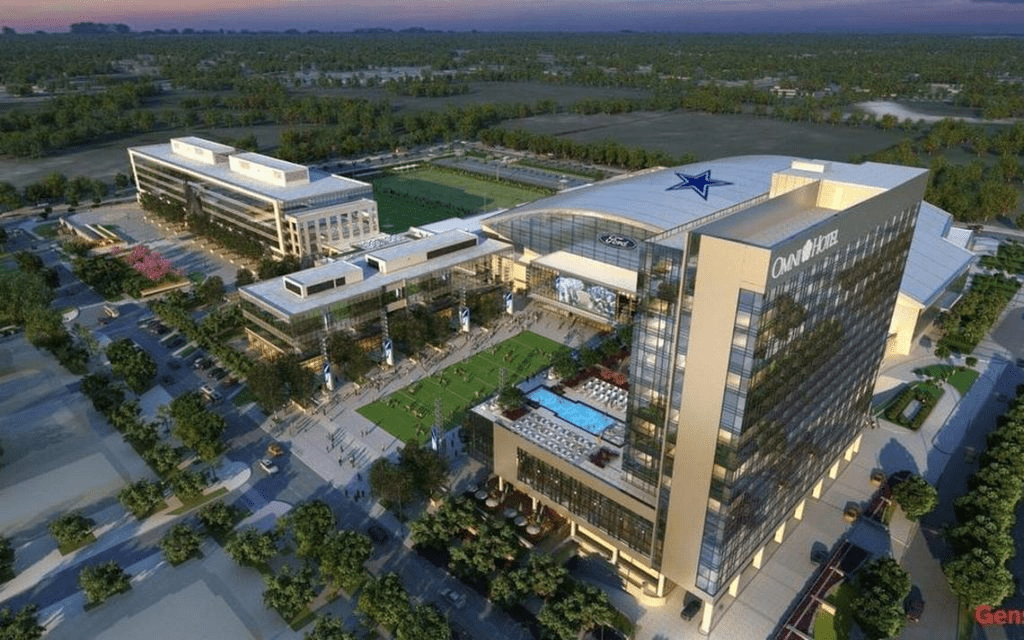
In Dallas, there is a clear migration of capital and intellectual resources toward Uptown. This district has firmly established itself as the primary magnet for tech corporations and financial institutions.
Walkability as an Asset. Uptown wins the competition due to its organic integration into the urban environment. The ability to walk from a desk to the shaded alleys of Klyde Warren Park or a cozy restaurant has become a key requirement for the new generation of professionals. The modern office is no longer an isolated “island”—it is now an organic extension of the urban lifestyle.
Downtown as a Cultural Mix. The traditional Central Business District (CBD) is undergoing a phase of deep reincarnation. It is gradually losing the monolithic nature of the banking sector, evolving into a dynamic mixed-use zone. Here, world-class hotels, private art galleries, and luxury residential apartments are displacing the outdated model of purely work-oriented space.
Dallas is not just a city growing upward. It is a living organism that has dared to undergo a complete architectural and social overhaul. By reclaiming space from concrete highways for blooming parks and breathing life into office skyscrapers through residential conversion, the city is setting a precedent for the entire world. We are witnessing the birth of a new urban utopia, where technological progress does not wall us off but stitches divided communities together. The Dallas of the future is a space where big capital has finally been placed at the service of humanity, turning former industrial scars into majestic monuments of humanism and authenticity.
Sources:
- https://www.papercitymag.com/real-estate/dallas-smart-district-tallest-high-tech-skyscrapers-amazon-headquarters/
- https://www.axios.com/local/dallas/2022/08/17/downtown-dallas-offices-apartments
- https://www.texastribune.org/2023/12/06/texas-office-space-housing-conversion/
- https://www.texastribune.org/2023/12/06/texas-office-space-housing-conversion/
- https://www.nbcdfw.com/news/health/five-years-after-covid-downtown-dallas-has-adapted-to-new-work-realities/3795026/

