
Deck parks have emerged as the premier architectural trend in Dallas over recent years, effectively transforming the concrete abysses of major freeways into flourishing urban oases. What initially began with the resounding success of Klyde Warren Park has now evolved into a comprehensive city-wide regeneration strategy. The primary objective is to reconnect neighborhoods that were forcibly severed by highway construction in the mid-20th century, returning vital pedestrian space and communal areas to residents right above the rushing streams of traffic. Discover how this “stitching” process is unfolding, who spearheaded these initiatives, and where it all began at dallas-future.com.
Klyde Warren Park 2.0: Architectural Reincarnation and Freeway Expansion
When Klyde Warren Park first debuted in 2012 atop the recessed Woodall Rodgers Freeway, skeptics dismissed it as a “costly experiment.” Today, this landmark is far more than a simple “green bridge”—it stands as the most successful case study of urban land reclamation in the United States, serving as the essential connective tissue between Downtown and Uptown Dallas. As of 2026, the project has entered its most ambitious phase yet, which urban planners have dubbed “Klyde Warren 2.0.”
This is not merely a cosmetic facelift or a simple replanting effort. It is a full-scale architectural transformation with a budget exceeding $120 million, extending the park’s boundaries westward and introducing entirely new functional dimensions to the city’s core.
A Cultural Manifesto in the Heart of the Metropolis
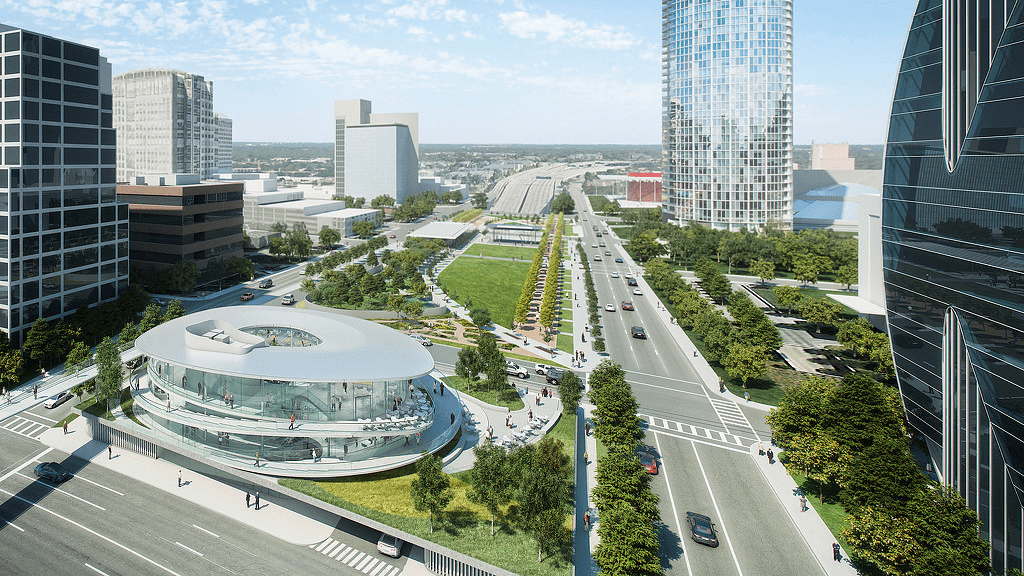
The visual centerpiece of this expansion is a three-story pavilion unofficially known as “The Glass Box.” Spanning 24,000 square feet (ca. 22 a) and situated closer to Field Street, this structure is designed to fulfill the city’s urgent need for high-end, multi-functional indoor spaces.
- Architectural Transparency. The building’s concept is rooted in seamless landscape integration. Thanks to expansive floor-to-ceiling panoramic glass, the boundary between the pavilion’s interior and the park’s lush pathways virtually disappear, creating an immersive natural experience.
- Vertical Logic. The first floor is dedicated to innovative culinary concepts and a state-of-the-art visitor center. The second level houses a premium event hall for conferences and exhibitions, while the rooftop is transformed into an open-air terrace offering the city’s finest views of the Museum Tower and the Perot Museum.
- Sustainable Revenue Stream. The pavilion will serve as the park’s primary financial engine. Revenue generated from corporate events and premium rentals will allow the non-profit Woodall Rodgers Park Foundation to maintain free public access and provide impeccable daily upkeep for the entire park.
Landscape Versatility and “Winter Magic”
The western portion of the park now features a groundbreaking new location—Jacobs Lawn. Far more than just another patch of grass, this is a high-tech engineered space designed on the principle of a transformer, capable of adapting to seasonal needs.
During the summer, it serves as an idyllic venue for outdoor lectures, yoga sessions, and moonlight cinema screenings. However, its true transformation occurs when the temperature drops. Jacobs Lawn was built with an integrated cooling system, allowing it to be converted into Northern Texas’s largest outdoor ice rink in just a few days.
This strategic addition turns the park into a year-round urban resort. An ice skating experience capable of rivaling Philadelphia’s Boathouse Row or New York’s Rockefeller Center has finally arrived in Dallas, establishing a new holiday tradition for thousands of local families.
Turning $120 Million into Billions in Real Estate Value
The expansion of Klyde Warren Park is a masterclass in effective public-private partnership. The project’s budget is derived from three main streams: city bonds, Texas state grants, and significant private contributions from the Dallas financial elite.
Why does big business eagerly invest in “deck parks”? The numbers tell the story:
- Real Estate Capitalization. Since the opening of the park’s first phase, the value of surrounding office and residential spaces has skyrocketed by 25–40%. Buildings overlooking the park have become the most coveted assets in the city.
- A Magnet for Corporations. New office towers, such as 2401 Cedar Springs, are being designed with direct visual or pedestrian access to Klyde Warren, making them irresistible to high-profile tenants like Goldman Sachs and JPMorgan.
- Social Responsibility and Legacy. For major donors whose names grace the park’s promenades, this is a way to be etched into Dallas history as the creators of its “green lungs.”
Halperin Park: An Architectural Bridge to South Dallas’s Future
Spring 2026 in Dallas is marked not only by preparations for the World Cup but also by the launch of one of the decade’s most socially significant projects: the opening of the first phase of Halperin Park. This is an act of “urban healing” intended to rectify the historical infrastructure mistakes of the previous century.
Reconstructing Social Justice
In the 1950s, the construction of the I-35E freeway effectively sliced the Oak Cliff communities in half, severing pedestrian connections and leading to decades of economic stagnation in South Dallas. For generations, residents lived in the shadow of a roaring, polluting highway.
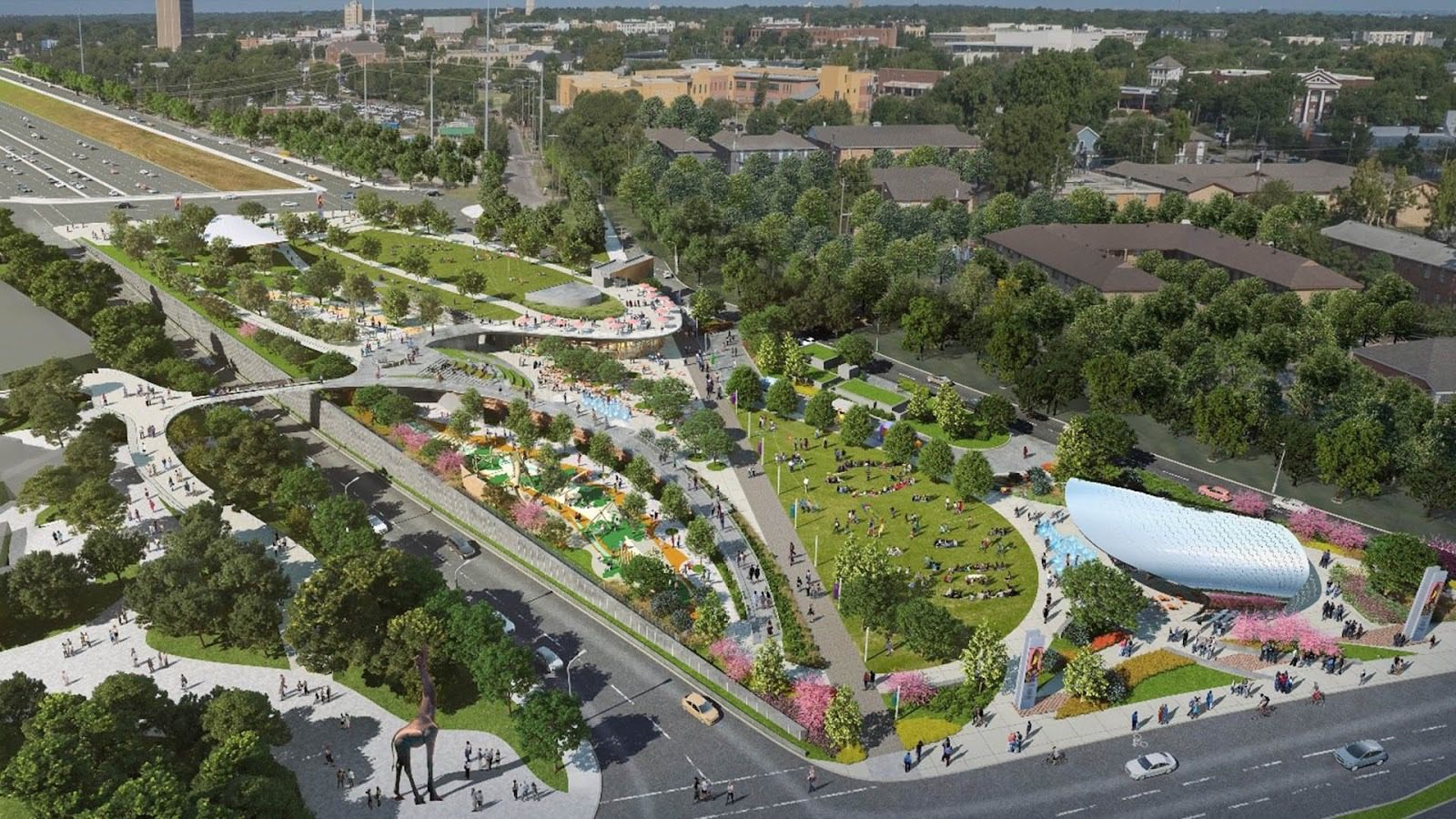
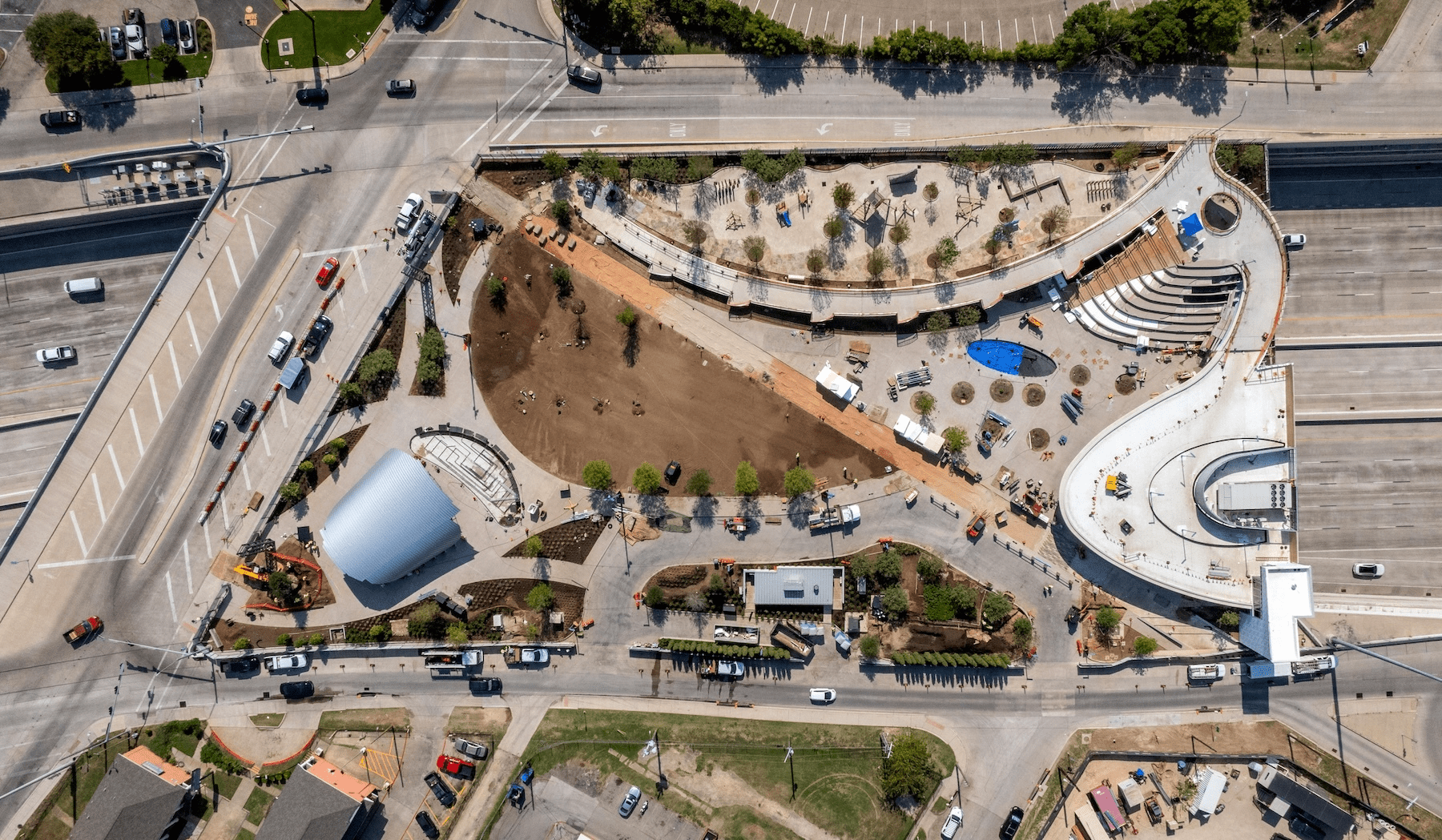
Halperin Park, designed as a deck park over the freeway, is built to reunite these divided neighborhoods. The architects aimed to do more than just plant trees; they sought to restore the area’s social fabric by providing a common ground for growth. The 1.2-acre initial phase is set to open just in time for the 2026 World Cup, allowing the city to showcase the dynamic transformation of its southern districts to global visitors.
Key features of Phase 1 include:
- “Treehouse in the Woods”: A unique play space for children integrated into the landscape to create the illusion of being in a forest within a sprawling metropolis.
- A New Amphitheater: A performance venue destined to become the primary stage for local cultural festivals and public World Cup match screenings.
- Promenades and Overlooks: The park’s terraces offer a fresh, atypical perspective of the Dallas skyline and the nearby Dallas Zoo.
The Stitch Project: Connecting Cedars and Downtown
The next major leap in the city’s master plan is the project over I-30, designed to link the city center with the historic Cedars district.
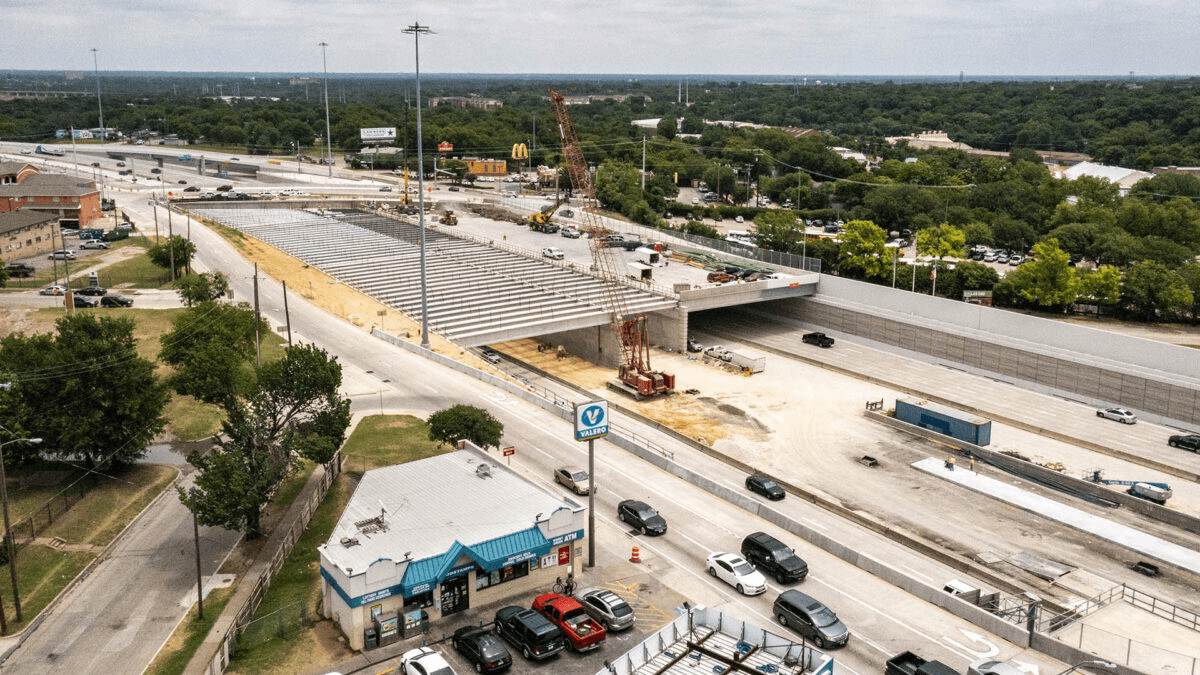
The Stitch Project envisions a series of caps over the freeway, allowing residents to easily travel from Old City Park to the skyscrapers of Downtown on foot or by bicycle. Long considered a “gray zone,” this area is undergoing a massive transformation thanks to $42 million in approved funding.
Comparison of Major Dallas Deck Parks
| Feature | Klyde Warren Park | Halperin Park (Phase 1) | I-30 Deck Park (Planned) |
| Location | Woodall Rodgers Freeway | I-35E (near the Zoo) | I-30 (Cedars) |
| Total Area | ~7 acres (with expansion) | 5 acres (total) | In design phase |
| Main Attraction | Ice Rink & Pavilion | Amphitheater & Treehouse | Connection to Old City Park |
| Status (Feb 2026) | Phase 2.0 Construction | Opening Spring 2026 | Funding Approved |
| Mission | Luxury Leisure & Business | Southern Revitalization | Tourism & Heritage |
A City Without Borders
Before our eyes, Dallas is executing the most ambitious architectural metamorphosis of the century, decisively shedding its outdated status as a “car-centric metropolis” in favor of a new role as a city for people. What were once deep scars on the city’s body in the form of noisy, dirty highways are now being transformed into blooming parks by visionary planners. These “green roofs” over concrete traffic flows perform a critical environmental mission, acting as giant natural lungs that mitigate the “heat island” effect and provide relief from the scorching Texas sun. Dallas in 2026 demonstrates to the world: even above the roar of an eight-lane highway, one can find a space for meditation, community, and genuine joy.
Sources:
- https://www.swagroup.com/stories/a-park-with-a-purpose-southern-gateway-public-green/
- https://dallasinnovates.com/i-35-deck-park-by-dallas-zoo-will-have-major-wow-factor-and-a-driving-mission/
- https://www.dmagazine.com/frontburner/2019/10/txdot-dallas-interstate-30-canyon/
- https://www.gensler.com/projects/klyde-warren-park-2-0
- https://labreportdallas.com/p/oak-cliff-halperin-deck-park

