
The Dallas–Fort Worth (DFW) metroplex has transformed into the world’s largest testing ground for mass commercial drone delivery. While most global metropolises are still running limited pilot routes, residents of DFW suburbs like Frisco, Grapevine, Pearland, and North Richland Hills receive packages, meals, and medication dropped straight from the sky every single day.
Sprawling suburban developments, favorable flat terrain, and progressive policies from the Federal Aviation Administration (FAA) have created the ideal proving ground for autonomous drones in urban airspace. Read more about this phenomenon on dallas-future.com.
Airborne Logistics Operators: Global Heavyweights in a Single Region
What makes Dallas unique is that several global leaders in autonomous air delivery are rolling out their networks across the very same metropolitan area simultaneously.
- Alphabet Wing. The subsidiary of Google’s parent company, Alphabet, has built DFW’s largest urban network of autonomous drones. Wing’s drones easily hit cruising speeds of up to 65 mph (110 km/h) and lower packages with surgical precision via a slender tether, never having to touch down on a customer’s lawn or driveway.
- Flytrex. The Israeli startup partnered directly with major fast-food chains and grocery supermarkets. Flytrex deploys heavy-duty hexacopters designed for higher payloads, swiftly delivering piping-hot meals and fresh groceries straight from local retail centers.
- Zipline. Famous for pioneering emergency deliveries of blood and medical supplies to remote regions of Africa, Zipline has launched its next-generation autonomous fleet in Dallas. These aircraft deliver orders almost silently and pinpoint-accurately, using a specialized companion tethered droid.
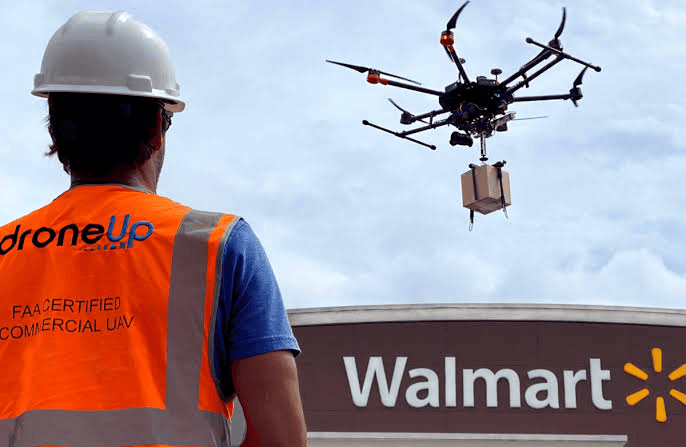
- Walmart and Amazon Prime Air. America’s retail giant Walmart teamed up with tech powerhouses Wing and Zipline to blanket more than 75% of the DFW metroplex population with ultra-fast aerial delivery.
This unprecedented density of flight corridors has turned North Texas into the epicenter of next-generation civil aviation standards. The airspace above Dallas serves as living proof that autonomous cargo aviation is no longer science fiction or a hobby for tech enthusiasts.
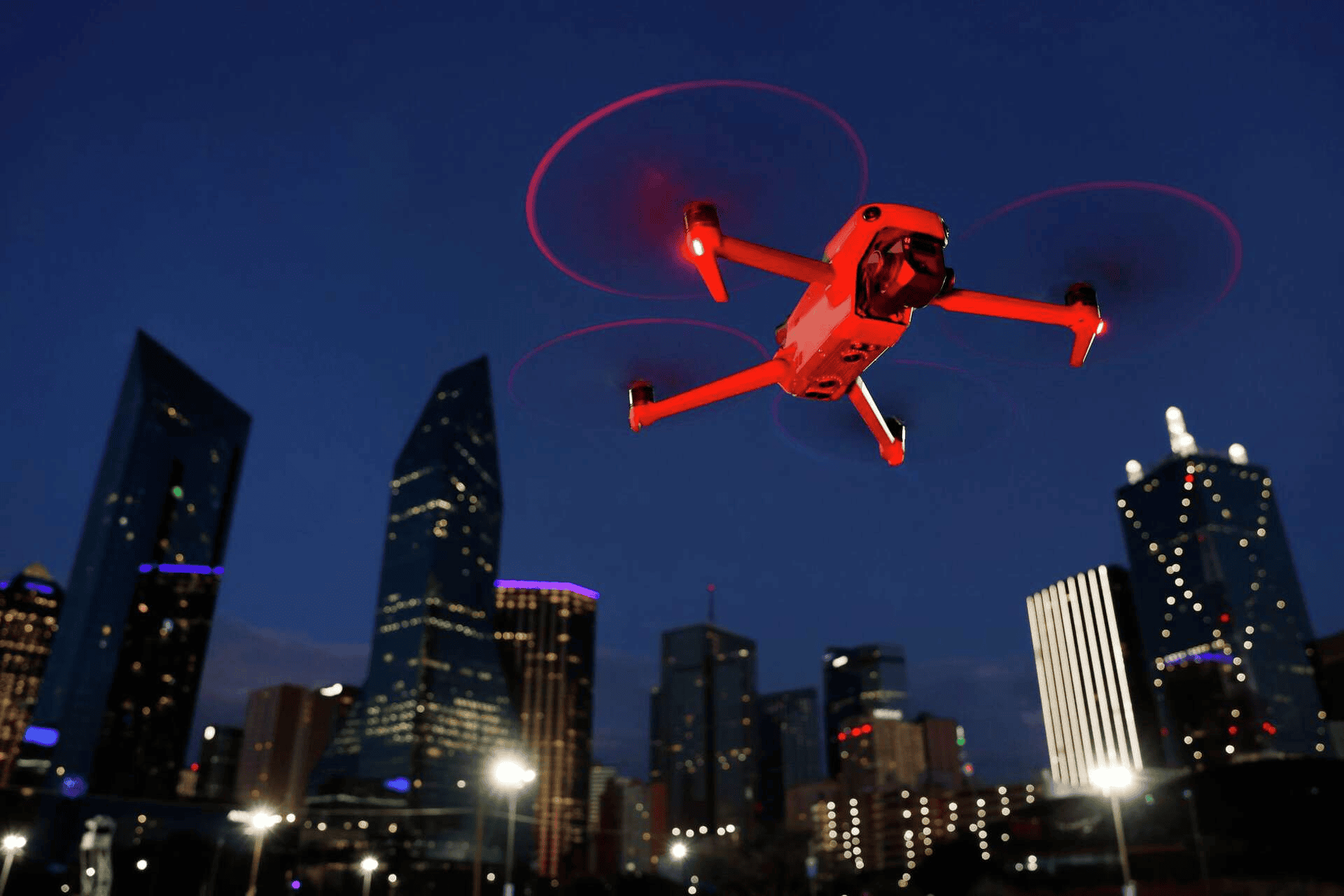
BVLOS Certification and the Regulatory Breakthrough
For years, the biggest technological and legal hurdle facing drone logistics was the visual line of sight rule: an operator had to maintain constant, unaided eye contact with the aircraft. Dallas spearheaded both a legal and technical breakthrough, becoming the first major metro area where companies secured FAA authorization for Beyond Visual Line of Sight (BVLOS) operations without requiring visual ground observers.
Instead of relying on human lookouts or manual flight controllers, drones crisscrossing Texas skies depend entirely on high-precision radio sensors, onboard radar, and artificial intelligence algorithms.
Proprietary Detect-and-Avoid (DAA) systems enable drones to spot other aircraft in real time—from air ambulances to private planes—and autonomously adjust their altitude and flight path in microseconds. This level of split-second accuracy establishes a whole new paradigm, proving that traditional and autonomous aviation can safely share crowded urban skies.
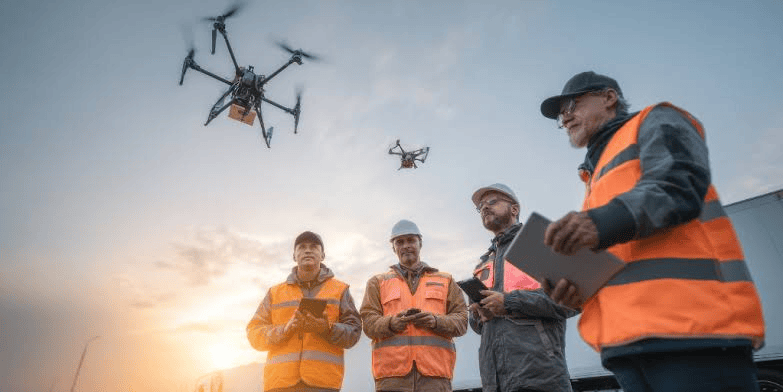
How Aerial Delivery Is Reshaping the Urban Landscape and Everyday Life
Mass drone transit is no longer an experimental curiosity—it is now woven into the physical landscape and daily rhythm of North Texas. Moving delivery to the sky is quietly, yet fundamentally, changing urban infrastructure and the way Dallasites shop.
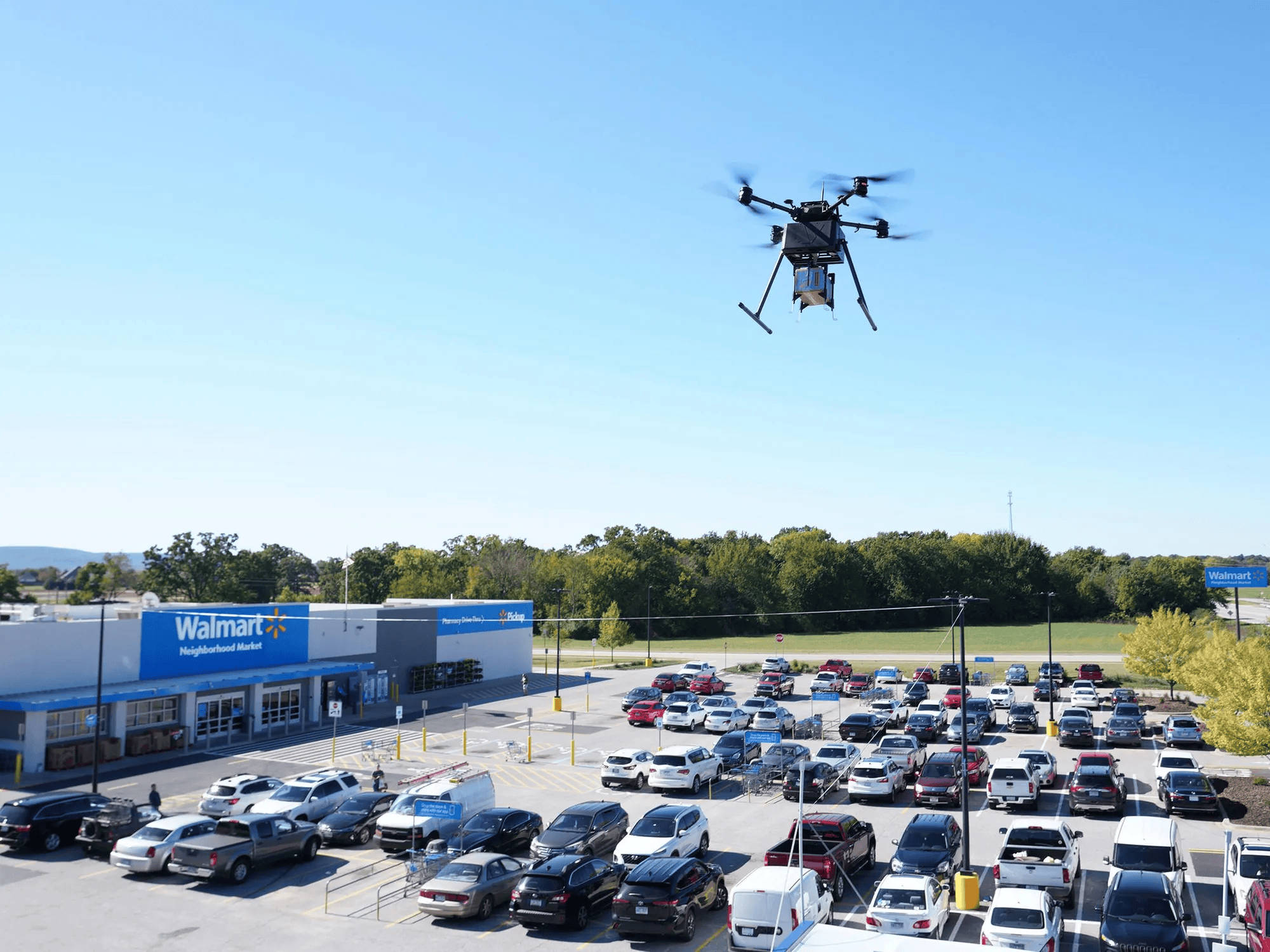
- Nesting hubs and mall retrofits. Rather than spending fortunes building full-scale airfields, operators took a much more practical route: they turned rooftops and peripheral parking lots at Walmart Supercenters and shopping malls into launchpads known as “nests.” Store employees pack orders into specialized protective pods right outside the facility and clip them onto the drone, which launches autonomously within minutes of a customer clicking “Buy.”
- Highway congestion relief and green benefits. Drones take over the notorious “last mile”—the most expensive, slow, and emissions-heavy phase of logistics. Swapping gas-guzzling delivery vans for compact electric drones significantly eases traffic along Dallas’s notoriously congested arteries. Beyond saving time on roads, it measurably slashes carbon emissions and cuts urban noise, keeping residential neighborhoods cleaner and quieter.
Lifting small-package delivery off the streets proves that a modern metropolis can roll out future-proof technology without overhauling its street grid. Dallas proves a crucial point: you don’t need to widen highways to speed up deliveries; you just need to unlock the open space above them.
How to Order Drone Delivery in Dallas: A Step-by-Step Guide
Ordering a drop from the sky is straightforward. All it takes is a few taps in an app and clearing a small open spot outside your home.
- Check Your Coverage and Choose the App
Depending on your DFW suburb and retailer, orders are placed either through the merchant’s app (like Walmart) or directly through an operator platform (Wing, Zipline, or Flytrex). During initial registration, satellite imagery and GPS automatically verify that your address falls within the service zone and that your yard is free of hazards like dense tree canopies or overhead power lines.
- Pick Your Items and Mind Weight Limits
Browse the catalog for prepared meals, groceries, daily essentials, or over-the-counter medicine. As you add items to your cart, the app calculates total payload weight. Depending on the drone model, packages must stay within strict weight limits—usually 2.6 to 6.6 lbs (1.2 to 3 kg) per flight. If you exceed the limit, the app automatically splits your order across two separate drones.
- Checkout and Set Your “Drop Zone”
At checkout, you pinpoint the exact delivery spot on your property: the center of your lawn, a clear driveway, or an open backyard. Once payment goes through, smart algorithms chart the flight path while hub workers pack your items into a protective aerodynamic pod.
- Real-Time Flight Tracking
An interactive map in the app tracks the drone’s flight from the nesting hub straight to your doorstep. You get notifications a couple of minutes before arrival and right as the drone begins hovering.
- Touchless Drop and Pickup
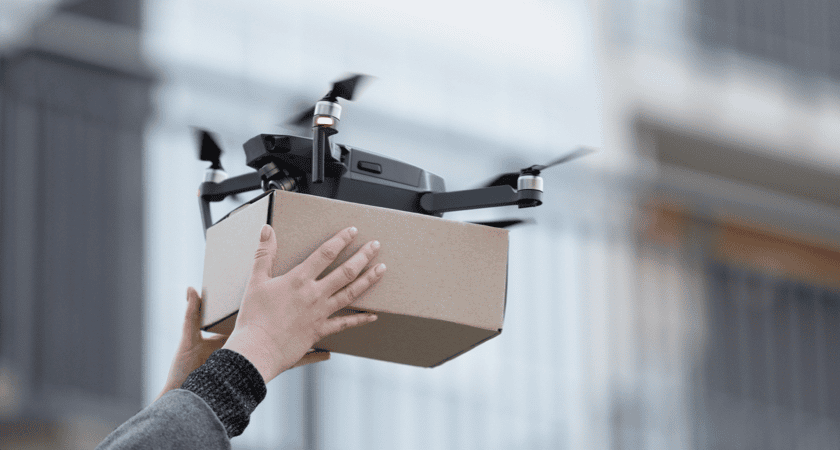
The drone arrives at the target coordinates, hovers at a safe altitude (around 20–30 feet / 7–10 meters), and gently lowers the pod via tether or drop module right into the designated spot. The aircraft never touches the ground. The moment the package hits the grass, the latch releases automatically, the tether retracts, and the drone heads back to base. You simply walk outside and pick up your order.
Sky Logistics Economics: What Does It Cost the Consumer?
One of the most pressing questions surrounding drone delivery is affordability. Unlike early pilot programs where drone delivery was marketed as an expensive luxury, in Dallas it has already evolved into a practical, accessible utility.
- Free delivery with subscriptions
For most DFW suburbanites, drone delivery is essentially free. The region’s dominant player, Walmart, fully bundled drone drops into its Walmart+ membership. Subscribers pay zero extra delivery fees for drone dispatches on orders meeting the standard minimum basket size (usually $35). - Competitive pricing against standard couriers
For non-subscribers or standalone apps (such as Wing or Flytrex), delivery fees hover between $3.99 and $5.99 per flight. That is on par with—and often cheaper than—traditional car courier services like DoorDash or Uber Eats, where final totals balloon with driver tips, fuel surcharges, and peak-hour surge fees. - Why operators and retailers win
Low customer pricing boils down to a fundamentally different operational model. In conventional trucking, driver salaries, vehicle wear-and-tear, and fuel make up the lion’s share of last-mile costs. Electric drones consume pennies worth of electricity, and a single remote pilot in a flight operations center can oversee dozens of autonomous aircraft at once.
For Dallas residents, airborne logistics is no longer a status gimmick. It has proved both faster and more cost-effective than standard automobile couriers.
Tapping into the Skies: How Local Businesses Can Join the Drone Network
Dallas’s drone boom is not reserved for retail titans like Walmart or Google; local small and medium-sized businesses are getting in on the action too. Neighborhood coffee shops, bakeries, pharmacies, and specialty stores can now match multinational chains on delivery speed.
- Site requirements and launchpads
Businesses do not need to build their own launch pads. Providers like Flytrex and Zipline use a shared-hub model. If a cafe or retail shop sits within range of an established nest—or has an open parking lot or accessible flat rooftop of roughly 150–200 square feet (15–20 sq meters)—it can tap into a shared takeoff point. For off-grid merchants, operators set up compact mobile loading stations. - Software integration and order fulfillment
Setup barely interrupts standard kitchen or retail workflows. The business receives a dedicated partner tablet. When an order drops in, staff pack the items into standard insulated containers sized to fit the drone’s cargo bay. A store runner or hub courier then walks the pod to the launchpad, where the drone automatically latches onto it. - Financial models and partner fees
Small merchants don’t have to purchase drones or cover maintenance—all flight operations, hardware, and legal compliance (including BVLOS certifications) fall entirely on the network operator. Depending on the provider, local merchants pay either a flat monthly software subscription or a commission per delivered order (typically 10% to 15%), which is frequently cheaper than traditional third-party delivery apps. - Marketing reach and expanded delivery radii
Joining a drone fleet instantly expands a merchant’s delivery radius to 5–6 miles (8–10 km) without sacrificing food quality. Hot artisan pizza, fresh pastries, or iced espresso land on the customer’s doorstep in 5 to 7 minutes, retaining peak temperature and presentation—something car couriers caught in gridlock simply cannot guarantee.
Challenges and Roadblocks Ahead
Despite staggering expansion and momentum, commercial drone operations in Dallas still face hurdles that demand ongoing engineering ingenuity and community trust-building.
- Noise pollution and the quest for quiet. The distinct high-pitched buzz of spinning rotors maneuvering above quiet residential neighborhoods has drawn occasional friction from residents. To protect community goodwill, tech companies are pouring millions into acoustic mitigation. For instance, Zipline engineered proprietary propeller blades and acoustic nacelles that blend aircraft noise seamlessly into standard ambient urban soundscapes.
- Unpredictable Texas weather. North Texas weather regularly tests drone hardware to its limits. Severe summer thunderstorms, sudden microbursts, high wind shears, and destructive hail remain persistent hazards. When severe weather strikes, operators ground fleets immediately and secure aircraft in weatherproof hangars, temporarily pausing deliveries.
- Privacy concerns and peace of mind. Overhead cameras and sensors initially sparked worries that drones might capture private backyard footage. To ease privacy concerns, operators phased out high-definition optical cameras in favor of lidar, ultrasonic sensors, and low-resolution infrared detectors. These provide centimeter-accurate obstacle avoidance and 3D mapping without capturing identifiable faces or license plates.
The Dallas experience proves that engineering triumphs are only half the battle. The true measure of autonomous logistics lies in how gracefully it navigates volatile weather, respects personal boundaries, and blends naturally into the fabric of everyday metropolitan life.
The Future: The Integrated 3D City
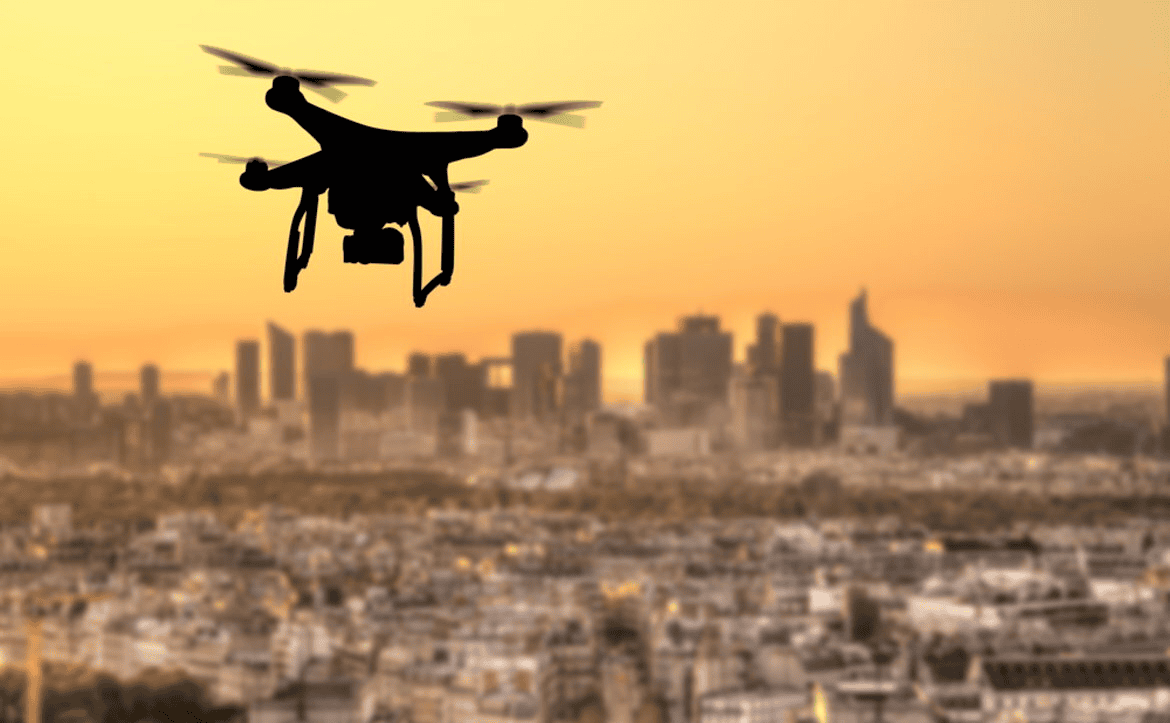
Delivering small retail items and takeout meals in Dallas is just phase one of a much bolder spatial transformation. Municipalities across DFW, alongside federal aviation regulators, are actively building a comprehensive low-altitude air traffic management architecture. The ultimate vision: a unified digital dispatch network capable of coordinating thousands of lightweight cargo drones alongside emerging passenger eVTOL air taxis.
Dallas is forging the blueprint for the world’s first true three-dimensional metropolis—where logistics and transportation are no longer shackled to flat pavement, but shared safely across multiple vertical corridors. Driven by forward-thinking regulation, self-governing AI, and unmatched corporate collaboration, Dallas has become the first city to blur the line between street-level traffic and skyward navigation.

