
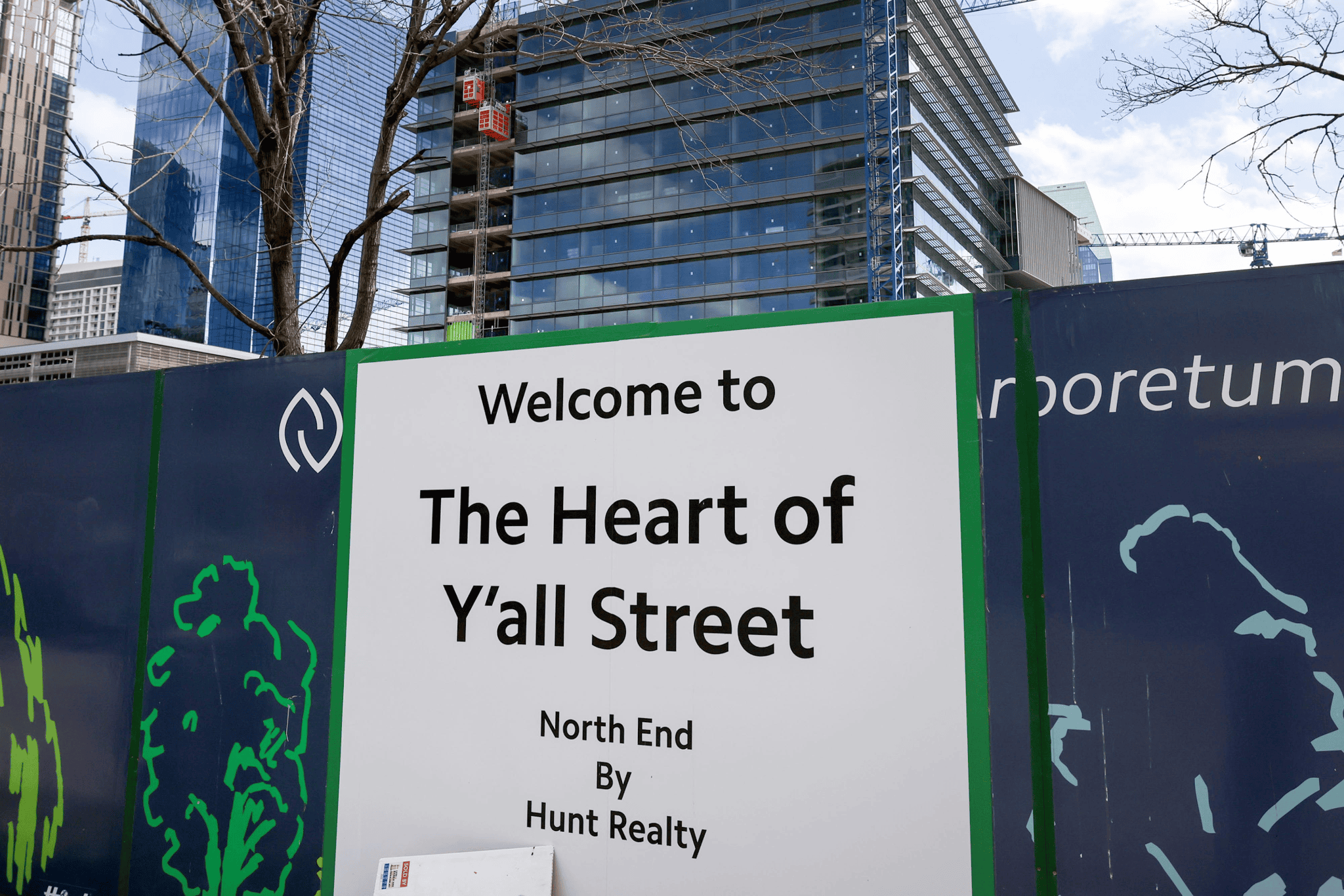
For decades, Dallas’s pop-culture image rested on three pillars: oil rigs, cowboy hats, and endless highways. Over the past few years, however, Texas has quietly—and sometimes very loudly—carved away a sizable slice of California and New York’s tech and financial pie. The Dallas–Fort Worth metroplex, dubbed the “Silicon Prairie” by local optimists back during the 1990s telecom boom, is experiencing a renaissance. Today, banking giants, venture capital funds, payment processors, and crypto firms are moving here in droves. So many, in fact, that the city’s financial district has already earned the tongue-in-cheek nickname Y’all Street—a play on Wall Street and the classic Southern greeting y’all. Let’s take a closer look at why major crypto and fintech heavyweights are falling for Dallas on dallas-future.com.
Taxes, Megawatts, and Common Sense: The Cold Math Behind Capital’s Migration to Dallas
Big capital rarely relocates on a whim like, “Hey, let’s move somewhere you don’t need a puffer jacket in winter and the steaks are the size of dinner plates.” In Dallas’s case, cold financial arithmetic won out—something even Wall Street’s historic prestige and Silicon Valley’s misty-eyed romance couldn’t compete with.
When the CFOs of tech giants and investment funds crunched the numbers, North Texas offered three undeniable advantages:
- A tax oasis without shady offshore loopholes. Texas levies zero state personal income tax, and its corporate tax burden is noticeably lighter than New York’s or California’s. For fintech startups, investment funds, and highly paid executives, that translates into legal, transparent savings of millions of dollars at every stage of scaling. That capital stays in the company’s valuation instead of vanishing into state coffers.
- Room to grow instead of cramped skyscrapers. While Manhattan executives agonize over the cost of every square foot of lease space and try to squeeze teams into aging office towers, corporations are building sprawling, futuristic campuses in Dallas suburbs like Plano, Irving, and Westlake. These are self-contained ecosystems complete with private parks, running trails, fitness centers, helipads, and backup power substations.
- Cheap energy and industrial muscle. Texas runs its own independent power grid (ERCOT) backed by massive wind, solar, and natural gas generation capacity. For blockchain networks, financial exchanges, and AI data centers that burn through tens of megawatts around the clock, access to reliable, competitively priced electricity is a matter of survival and profit margins.
Ultimately, the Texas relocation trend has shifted from a passing fad to a new economic standard. Major corporations have simply stopped overpaying for East and West Coast zip codes. Instead, they’ve chosen a region that lets businesses build, scale, and keep what they earn.
Wall Street Titans on the Texas Prairie: Who Has Already Unpacked in Dallas
When an ambitious startup rents a cozy coworking space in Texas, it warrants a brief blurb in the local business section. When Wall Street titans move entire divisions and thousands of jobs there en masse, it’s a tectonic shift on the U.S. financial map.
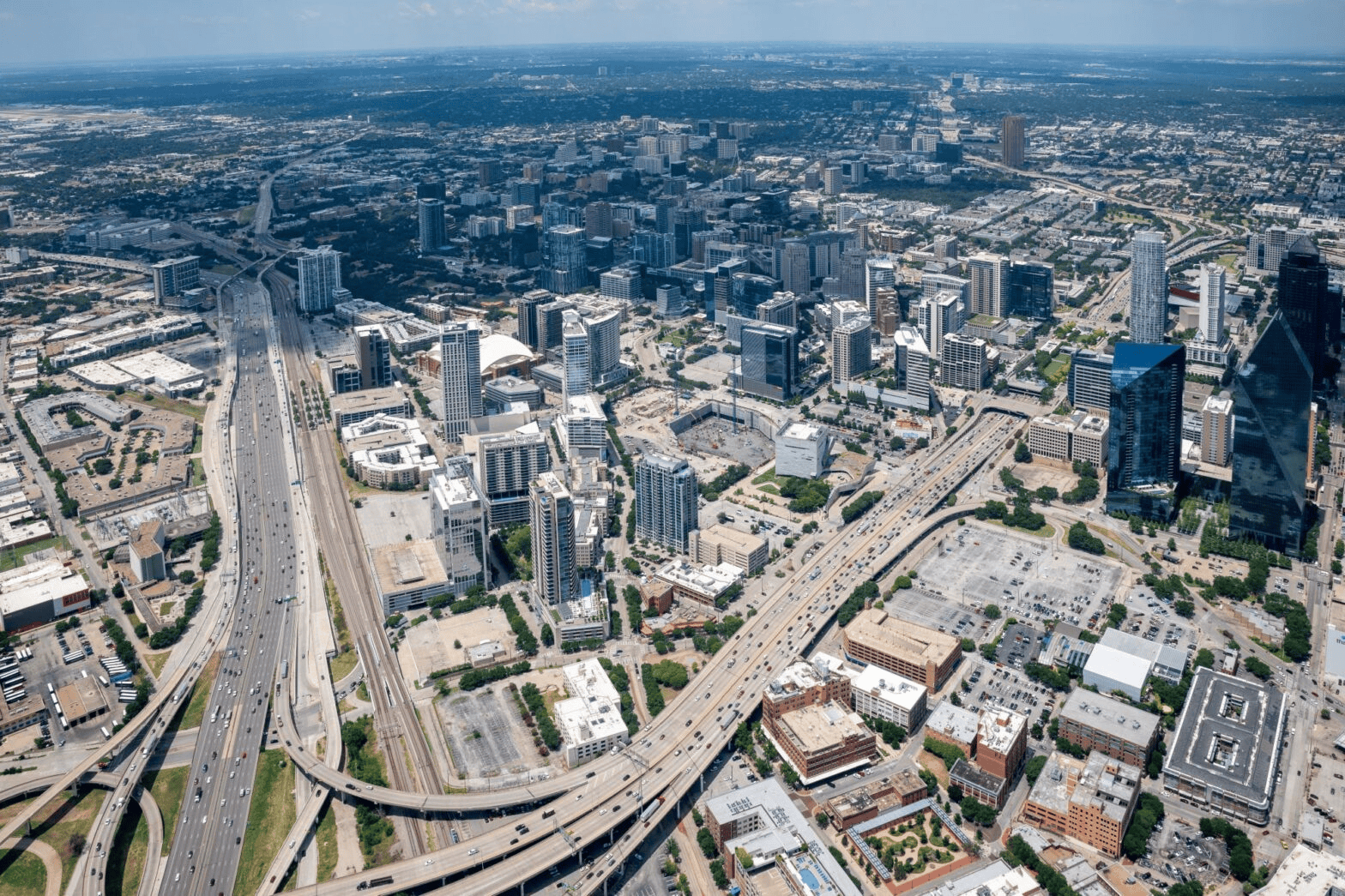
By financial-sector headcount, the DFW metroplex has already cemented its spot at number two nationwide, breathing right down New York’s neck. Today, Y’all Street is no longer just a witty meme among financial commentators—it’s a concrete investment reality backed by multibillion-dollar campuses.
| Company | DFW Presence | Key Infrastructure Projects |
| JPMorgan Chase | Over 12,000 employees (more than in New York City itself) | Massive tech and operations campus in suburban Plano; aggressive expansion of its Private Bank division |
| Charles Schwab | 5,000 to 10,000 employees | Fully relocated its global headquarters from San Francisco to Westlake, Texas |
| Bank of America | Over 10,000 employees | Construction of a new 30-story office tower in downtown Dallas |
| Wells Fargo | Over 5,000 employees | Building a $570 million campus on the shores of Lake Carolyn in Irving housing 4,500 jobs |
| Goldman Sachs | Thousands of employees (rapidly scaling) | Developing a new 800,000-square-foot regional campus in the heart of Dallas |
The crowning touch on this financial feast was the historic July 2026 launch of the Texas Stock Exchange, headquartered in Dallas. Backed heavily by heavyweights like BlackRock, Citadel Securities, JPMorgan, and Goldman Sachs, the new venue threw down a direct challenge to the long-standing NYSE and Nasdaq duopoly—offering issuers far less regulatory red tape and more straightforward listing rules.
A defining moment of this new era arrived in fall 2026, when major regional lender Frost Bank officially transferred its stock listing from the New York Stock Exchange to TXSE, symbolically ringing the opening bell in Dallas. Major corporations across the American South now have a world-class stock exchange right in their own backyard, sealing Texas’s status as the nation’s newest financial capital.
Code Over Vaults: How Dallas Fintech Merges Big Money with Blockchain
Surrounding North Texas’s banking giant headquarters, a dense and ambitious fintech startup ecosystem has naturally taken root. While legacy banks brought trillions of dollars in assets under management to the region, local tech teams have learned how to turn those capital flows into fast, modern digital products. Regional venture capital funds alone have already amassed over $4 billion—triple what they held at the start of the decade.
Among Dallas’s standout fintech players are companies rewriting the very mechanics of how money moves:
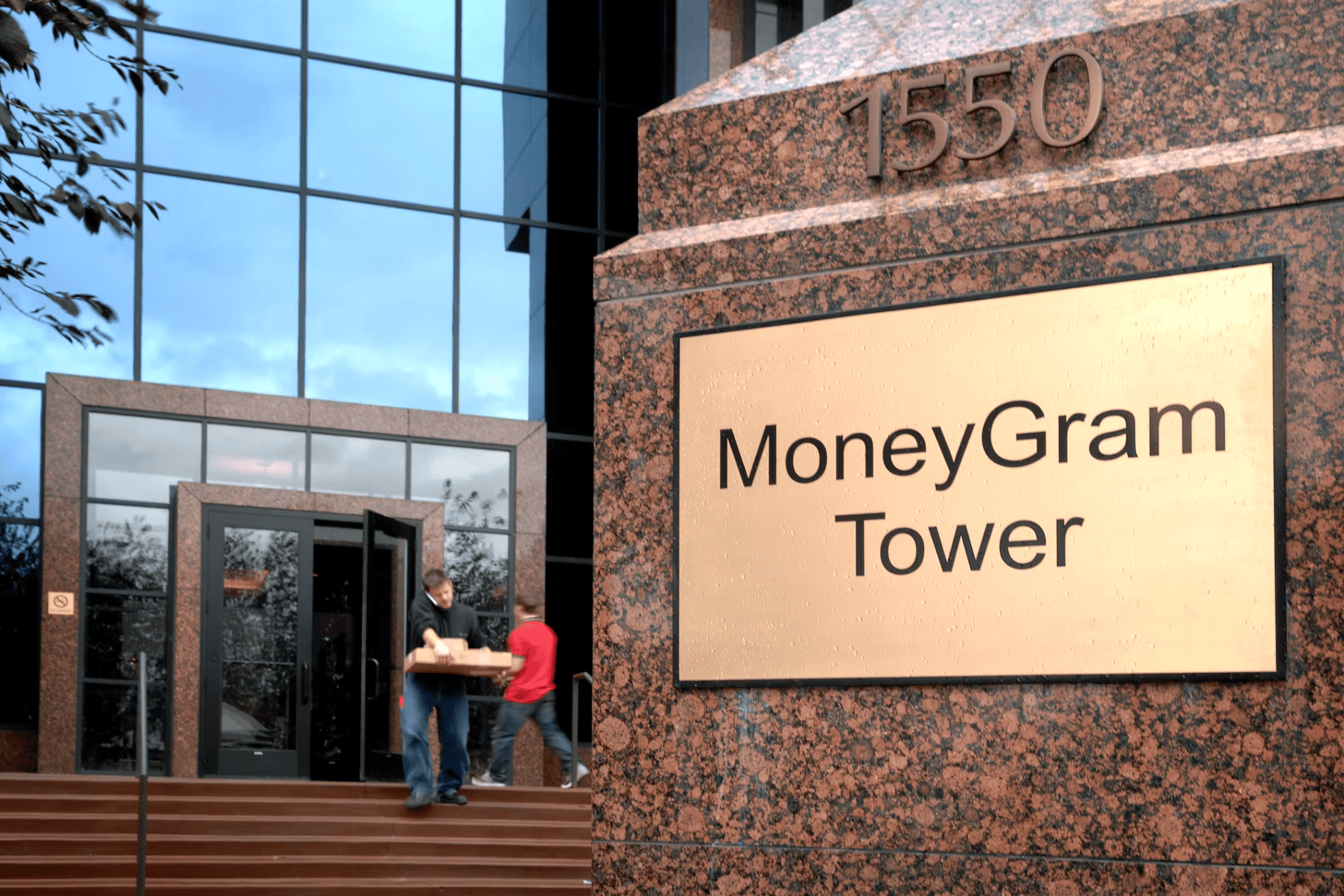
- MoneyGram — A global remittances veteran headquartered in Dallas that has undergone a sweeping digital transformation. The company is actively integrating stablecoins and blockchain rails for instant cross-border settlements, turning its traditional cash-exchange network into a bridge between fiat currencies and the crypto economy.
- Modo Payments — A tech platform designed to streamline payment gateways. It acts as a universal translator for financial systems, letting major corporations plug in dozens of new payment methods without painfully and expensively rewriting legacy banking code.
- Yendo — A bold consumer startup backed by Texas billionaire Mark Cuban that issues full-fledged credit cards secured by the value of a borrower’s car. The company replaced clunky paperwork with instant smartphone-based vehicle appraisals.
- Onramp and Arcadia — Next-generation firms building infrastructure for institutional crypto capital. While Onramp specializes in institutional Bitcoin custody through a multi-institution model (splitting keys across several independent entities), Arcadia engineers scaling solutions for blockchain networks.
Another distinct tech vector in Dallas is real-world asset (RWA) tokenization and the convergence of blockchain with artificial intelligence. Local developers and venture studios are actively testing next-gen architectures where autonomous AI agents pay for compute power or API services via Lightning Network microtransactions—while commercial real estate, oil royalties, and corporate bonds are digitized for transparent fractional investing.
As a result, Dallas has shed its old reputation as a mere low-cost back-office hub. Today, engineers here are building financial software that blurs the line between conservative Wall Street banking and next-generation decentralized tech.
Texas’s Regulatory Paradox: Freedom Paired with Strict Audits
Texas is often painted as a crypto “Wild West” where anything goes as long as the sheriff doesn’t mind. In reality, the landscape is far more pragmatic—which is precisely why serious institutional players are flocking here.
On one hand, the state has shown unprecedented support for digital assets. In 2025, Texas passed legislation establishing a State Strategic Bitcoin Reserve managed by the state treasury, while also enshrining citizens’ rights to self-custody and crypto mining into law. Better yet, local policies incentivize miners to capture flared natural gas at oil fields—literally turning the state’s oil legacy into fuel for the digital economy.
On the other hand, the Texas Department of Banking and the State Securities Board operate by a clear rule: “trust, but demand an audit.”
- Crypto platforms must strictly segregate customer funds from company assets. There is zero tolerance here for playing fast and loose with user deposits.
- Companies are required to undergo annual Proof-of-Reserves audits.
- Dollar-pegged stablecoins are treated like cash equivalents, meaning issuers must secure money transmitter licenses and comply with rigorous anti-money laundering and financial monitoring rules.
It is precisely this blend—clear rules of the road instead of regulatory limbo—that draws institutional investors who fear surprise lawsuits but are happy to meet well-defined compliance standards.

The Catch: Growing Pains in America’s Newest Hub
Of course, Dallas’s rapid rise as the South’s new financial and tech capital hasn’t come without noticeable side effects. Behind every sprawling new campus and billion-dollar investment lies a trail of urban and infrastructure headaches that newcomers confront within their very first week in town.
- An overheated housing market. The massive influx of well-paid financiers and engineers has predictably driven up home prices and rents across upscale city neighborhoods and northern suburbs. Texas’s once-legendary affordability is gradually eroding under surging demand—even if local price tags still bring a smile to anyone moving from Manhattan.
- Total car dependency. The DFW metroplex’s transit infrastructure was historically built for full-size pickup trucks, not pedestrians or bike lanes. Getting from a corporate campus in Plano to an evening venture meetup in downtown Dallas without a car is a logistical nightmare—featuring highway interchanges straight out of a roller coaster park and rush-hour traffic that tests even the most seasoned drivers.
- The dark side of crypto activity. A heavy concentration of digital assets attracts not only institutional investors, but resourceful scammers too. According to FBI data, Texas ranks second in the U.S. for crypto fraud losses—totaling roughly $1 billion a year, with a significant share tied to crypto ATM scams. Local law enforcement and regulators are scrambling to master modern blockchain analytics just to keep pace with fraudsters.
Despite these growing pains, the broader shift is irreversible. America’s financial map is no longer centered on a single coast. Dallas has proven beyond a doubt that building a world-class fintech and blockchain hub doesn’t require a view of the Hudson River or the Golden Gate Bridge. Sometimes, all it takes is competitive taxes, cheap kilowatts, predictable regulation, and good old-fashioned Texas pragmatism.

