

The construction of railroad connections played a central role in Dallas’s development. It dramatically transformed the city’s economy and mobility. Even more, it drew increasing numbers of people to Dallas, attracted by the abundance of jobs and high wages. Next on dallas-future.
Before automobiles became widespread, only railroads provided fast, affordable connections between city centers and outlying areas. In Texas, roughly 70% of all railroad mileage was in the Dallas–Fort Worth area.
How Did Railroad Construction Affect the State of Texas?
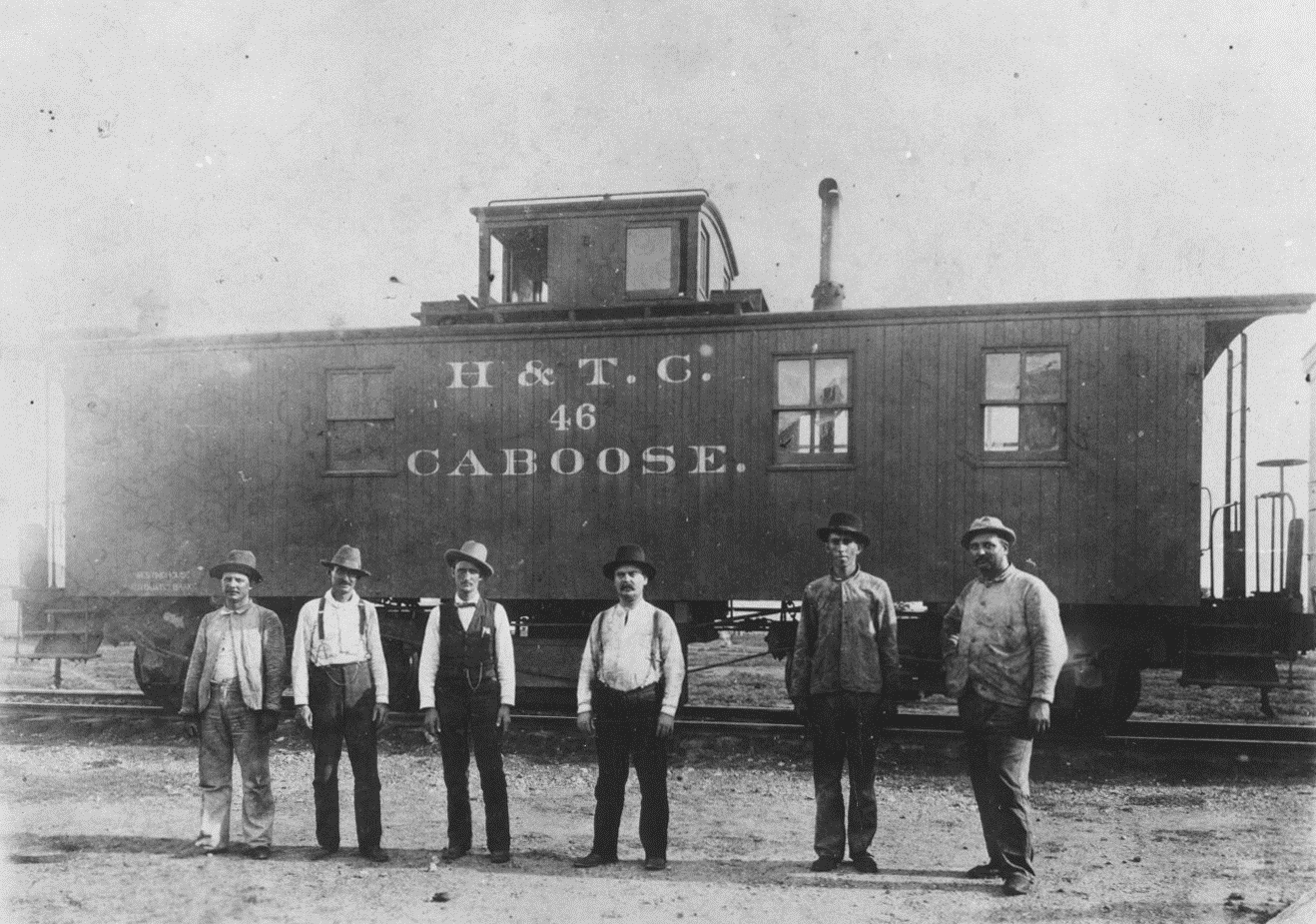
Most people associate Texas history with the Battle of the Alamo, cattle drives, and oil strikes. Undoubtedly, these events shaped the state’s culture and economy. However, the arrival of the railroad remains one of the most significant events in Texas history. The early years of construction launched a period of growth and prosperity that continues to this day.
Starting in 1836, leaders of the Republic of Texas passed laws authorizing railroad construction. Yet a short line near Houston wasn’t completed until 1853. Texas’s vast size and long distances between settlements meant that building rail connections required enormous investment and rested largely on the assumption that new communities would spring up along the tracks.
By 1870, several key developments had advanced the first rail lines that connected north to south and east to west. The state legislature passed a law requiring all railroads in Texas to be officially registered, giving the state greater control over railroad infrastructure. One of the most important lines was the Houston and Texas Central Railway (H&TC). Construction northward began in 1867, reached Dallas in 1872, and extended to the Red River in 1873.
Challenges During the Construction of Railroad Connections in Dallas
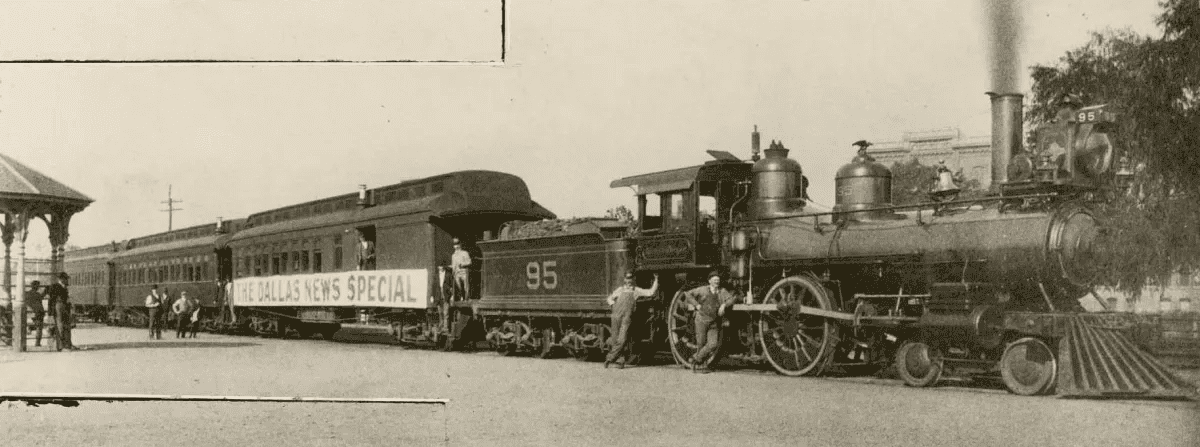
With the arrival of the Houston and Texas Central Railway, founder John Neely Bryan’s dream began to materialize. He watched as Dallas evolved into a vital rail hub. Entrepreneurs followed the line’s progress from Houston, opening makeshift stores to supply workers with provisions and essentials. When the track finally reached Dallas, these merchants set up permanent businesses, anticipating another major line: the Texas & Pacific Railway (T&P). From these ventures grew the first enterprises that would later become industry giants.
Expanding rail connections and the growth of the central business district brought new problems. In the early 1900s, tracks crisscrossed downtown and passenger and freight stations were scattered haphazardly, creating severe congestion. In 1911, the Kessler Plan proposed a bypass rail line around the city to free the center from overloaded tracks. On the western outskirts, a new station would consolidate seven rail companies and five terminals. City leaders quickly approved nearly all points of the plan.
In October 1916, the Dallas Union Terminal opened a new Renaissance-style station, the largest in the Southwest. Dallas finally shed its downtown chaos, and railroads could serve the city from the outskirts. At the height of the 1920s, Dallas Union Terminal handled up to 80 trains a day. This was the golden age of rail travel, when passengers could sleep comfortably in their cars and savor gourmet meals in dining cars.
The First Railroad Connections Within Dallas
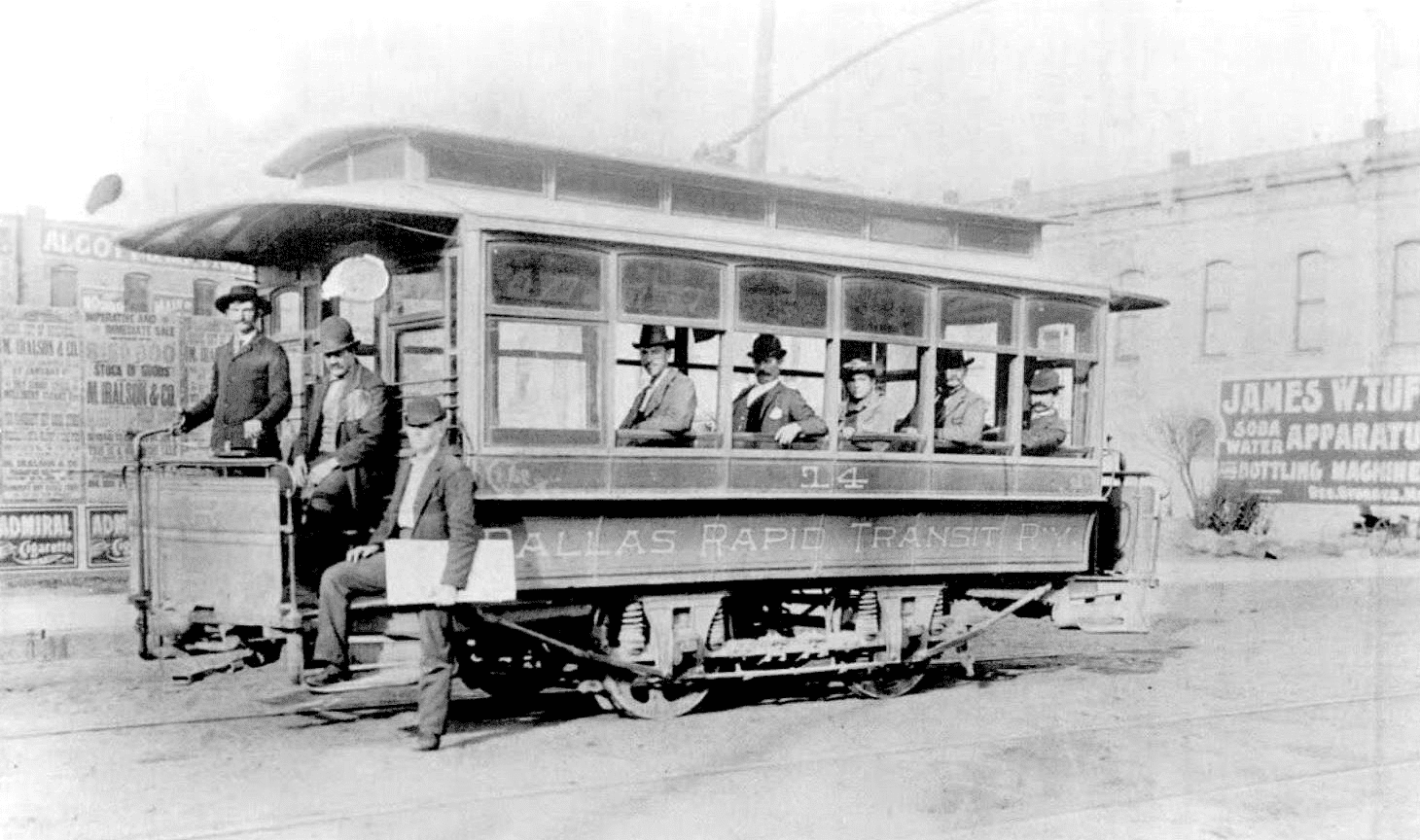
Historian James Barnes researched Dallas’s early railroad companies. One of the first was the West Dallas Railway Company, owned by Thomas L. Marsalis of Oak Cliff and his partners. Operating from 1890 to 1893, it ran two lines: one extended the Dallas & Oak Cliff Railway, founded by Marsalis in 1887, and the other ran through what are now Western Heights and Beverly Hills toward Mountain Creek.
The next significant company was the North Dallas Circuit Railway Company, officially founded in 1898, with roots back to 1889. Although its exact starting point is unknown, it ran toward Exall Lake. In 1902, it was absorbed by the Dallas Consolidated Electric Street Railway, which had begun operations in 1890 along Elm Street and through the city’s eastern section. This service was in high demand, as it allowed residents to travel conveniently across Dallas.
The largest and longest-running streetcar system, the Dallas Railway & Terminal Company, began in 1917 and served the city until its closure in 1956.
Commemorating Dallas’s Railroad Legacy Among Modern Residents
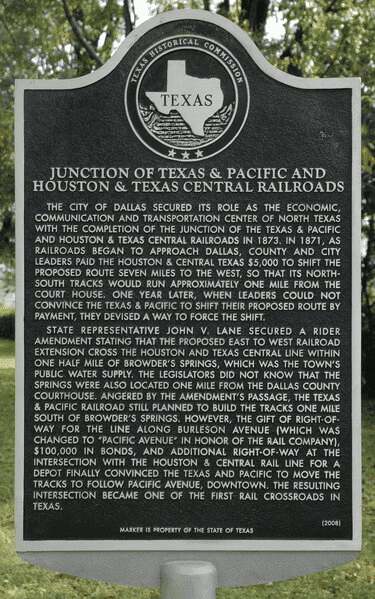
On November 13, 2009, Dallas County Judge Jim Foster unveiled a new historical marker honoring the city’s first railroads. The marker stands on Pacific Avenue under the I-45 freeway in downtown Dallas. It marks the spot where two major lines—the Houston & Texas Central Railroad and the Texas & Pacific Railway—intersected in 1872. Visitors can see remnants of the old tracks and imagine how this part of the city looked many years ago.
American Railroad Museum
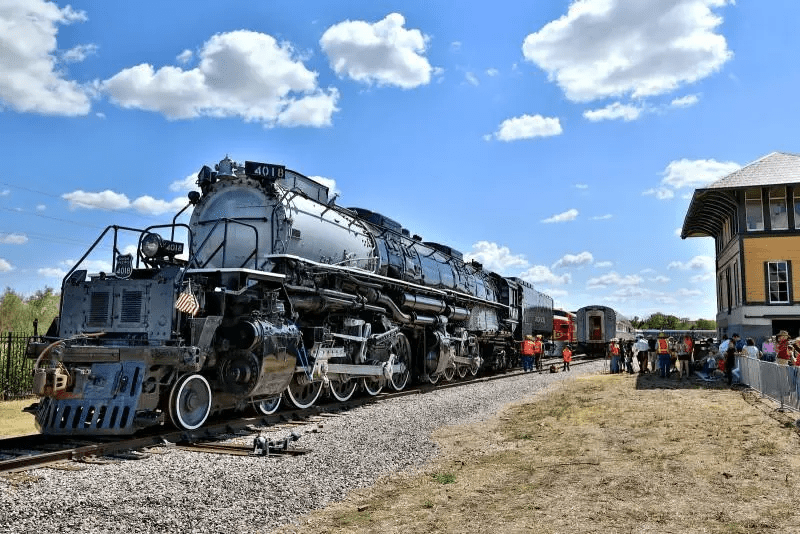
For many years, the American Railroad Museum, founded in 1962, was located in Dallas’s Fair Park and welcomed visitors at any time. Over time, the museum needed more space and improved facilities to preserve its collections. Ultimately, it was decided to relocate to Frisco, just 30 miles north of Dallas.
To learn more about the history of railroad connections in Dallas and across Texas, visitors can explore historic locomotives, cars, and other artifacts. In addition to permanent exhibits, the museum offers guided tours, where docents share fascinating stories about the development of rail transport in Dallas, engineering features of local trains, and their impact on the city’s economy and culture.
Although the museum’s new building is still under construction, it is already welcoming visitors and hosting special events.
- https://www.historictrains.org/collection/history-of-railroads-in-dallas
- https://dallascityhall.com/government/citysecretary/archives/Pages/Archives_1991-034.aspx#:~:text=The%20Dallas%20Electric%20Railway%20was,Operations%20ceased%20in%201934.
- https://cityofdallaspreservation.wordpress.com/tag/railroad-history-in-dallas/