
Dallas has established itself as one of the most technologically advanced metropolises in the U.S., where the Smart City concept has become the baseline standard for urban development. Digital infrastructure is embedded as early as the planning phase of new districts—from the historic The Cedars to the modern high-rises of Uptown. This creates an ecosystem where technology operates seamlessly behind the scenes, enhancing quality of life and resource management efficiency.
In this article on dallas-future.com, you will discover:
- How ordinary streetlights in Dallas are being transformed into the “brain” of the neighborhood, collecting real-time environmental and traffic data;
- How Smart Irrigation systems save millions of gallons of water by adapting to extreme Texas heat forecasts;
- The role of 5G and Wi-Fi 6 in creating an open-air office environment in the city center;
- How smart nodes assist emergency services and improve navigation for autonomous vehicles.
The Digital Nervous System: Smart Node Network and Dallas Intelligence
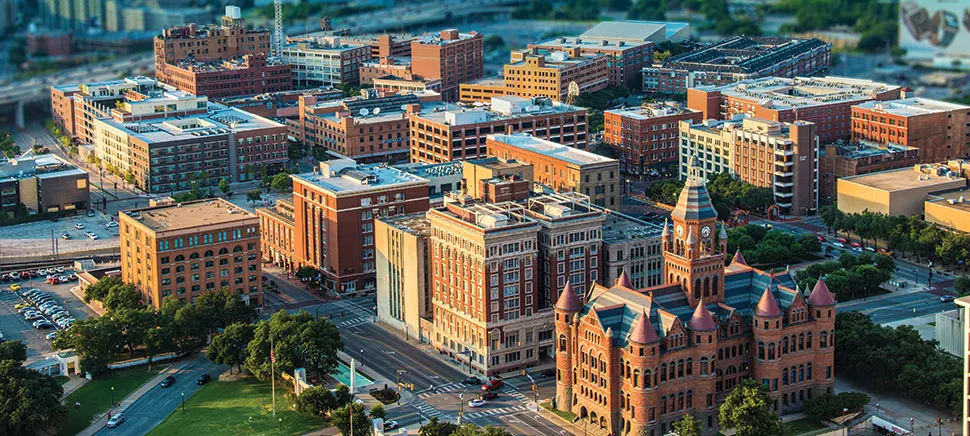
Modern Dallas architecture is more than just steel and glass; it is an invisible digital web permeating every sidewalk and facade. The Smart City concept is realized here through the deployment of the Smart Node network—integrated hubs that transform passive infrastructure into the city’s active nervous system.
- Intelligent Lighting as an IoT Platform. Streetlights in districts like Uptown and Victory Park have long evolved past being mere light sources. They are now robust, multi-functional platforms. Equipped with motion sensors, they conserve energy by dimming when streets are empty and instantly brightening upon detecting a pedestrian. Furthermore, they house Air Quality Index (AQI) sensors that relay data to a citywide network, allowing residents to monitor dust and allergen levels via mobile apps.
- Smart Irrigation and Climate Resilience. Texas heat demands surgical precision in resource management. New green spaces, including Klyde Warren Park and surrounding skyscraper plazas, utilize smart irrigation systems. Soil moisture sensors paired with meteorological algorithms allow the system to “predict” rainfall and automatically cancel scheduled watering. This saves up to 40% of water and prevents soil erosion, maintaining landscape architecture in pristine condition even during peak drought months.
- Public Connectivity and the “Digital Promenade.” Seamless 5G and Wi-Fi 6 coverage in Dallas’s business districts enables work outside the traditional office. This allows parks and plazas to function as viable co-working spaces. The city utilizes anonymized data from these networks to analyze “heat maps” of human movement, optimizing public transit schedules and the placement of new service points.
- Safety and Transportation Innovations. Real-world cases in Dallas include smart traffic signals capable of granting movement priority to ambulances or fire departments by analyzing their approach via GPS tags. Additionally, the Smart Node infrastructure paves the way for autonomous transport, serving as beacons for the precise positioning of self-driving shuttles.
Dallas’s digital nervous system makes the city “responsive” to the needs of every resident. It is an environment where technology works silently, ensuring safety, sustainability, and a level of comfort that was once considered unattainable.
Neighborhoods That “Think”: Cedars and Park Lane as Prototypes of the Future
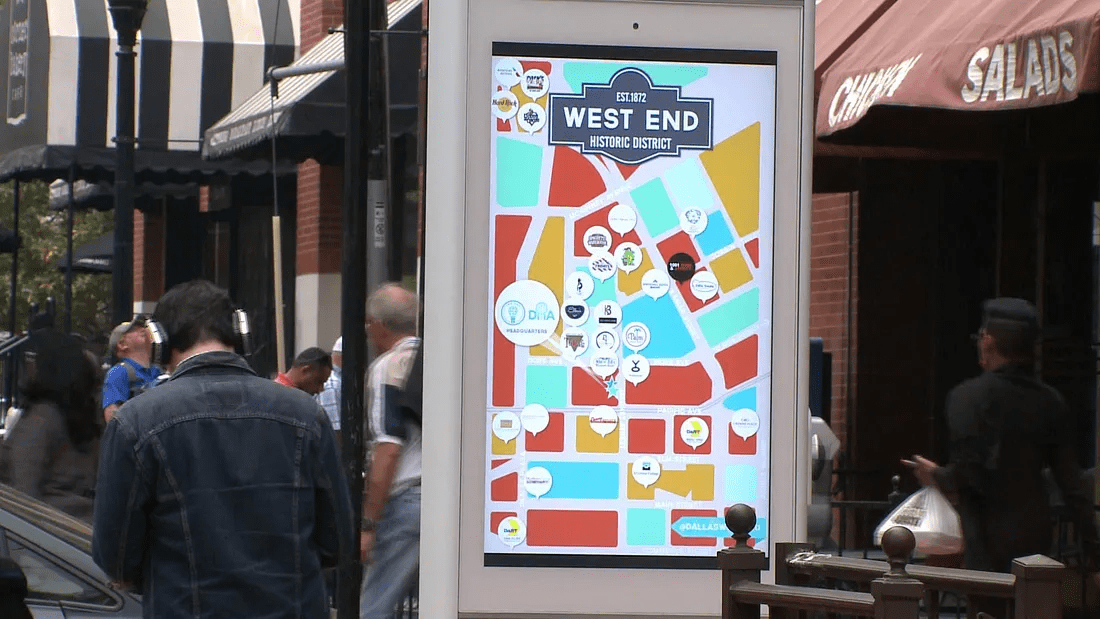
Dallas is shifting away from isolated developments in favor of holistic digital ecosystems. The most prominent examples of this approach are The Cedars and Park Lane, where architecture ceases to be a static form and begins to “think,” adapting to residents’ needs in real time.
- The Live-Work-Play Ecosystem in Park Lane. This district embodies the dream of ideal urban logistics. Here, residential towers, office centers, and entertainment hubs are integrated into a single organism. Flow management in these complexes is governed by algorithms. Intelligent elevator systems analyze peak load times, reducing wait times to a minimum. Within a single building, residents have access to professional co-working spaces, blurring the line between home and work.
- Innovation Labs in The Cedars. If the city center is its facade, The Cedars is its intellect. The neighborhood has become a testing ground for the boldest Smart City solutions. A networked energy consumption concept is implemented here: neighboring buildings can exchange load data, redirecting surplus energy to where it is needed most. Residents of The Cedars use unified mobile platforms as a “key” to everything—from unlocking apartment doors to booking a shared electric vehicle.
- Digital Security with AI Analytics. Safety in next-generation neighborhoods is based on preventative technologies. The implementation of AI-powered video surveillance allows for the automatic detection of anomalies—from smoke detection to unusual behavior in public zones. This is not just surveillance, but an active protection system that relays critical information to emergency services instantly.
Sustainable Resource Management: Digital Protection from Elements and Waste
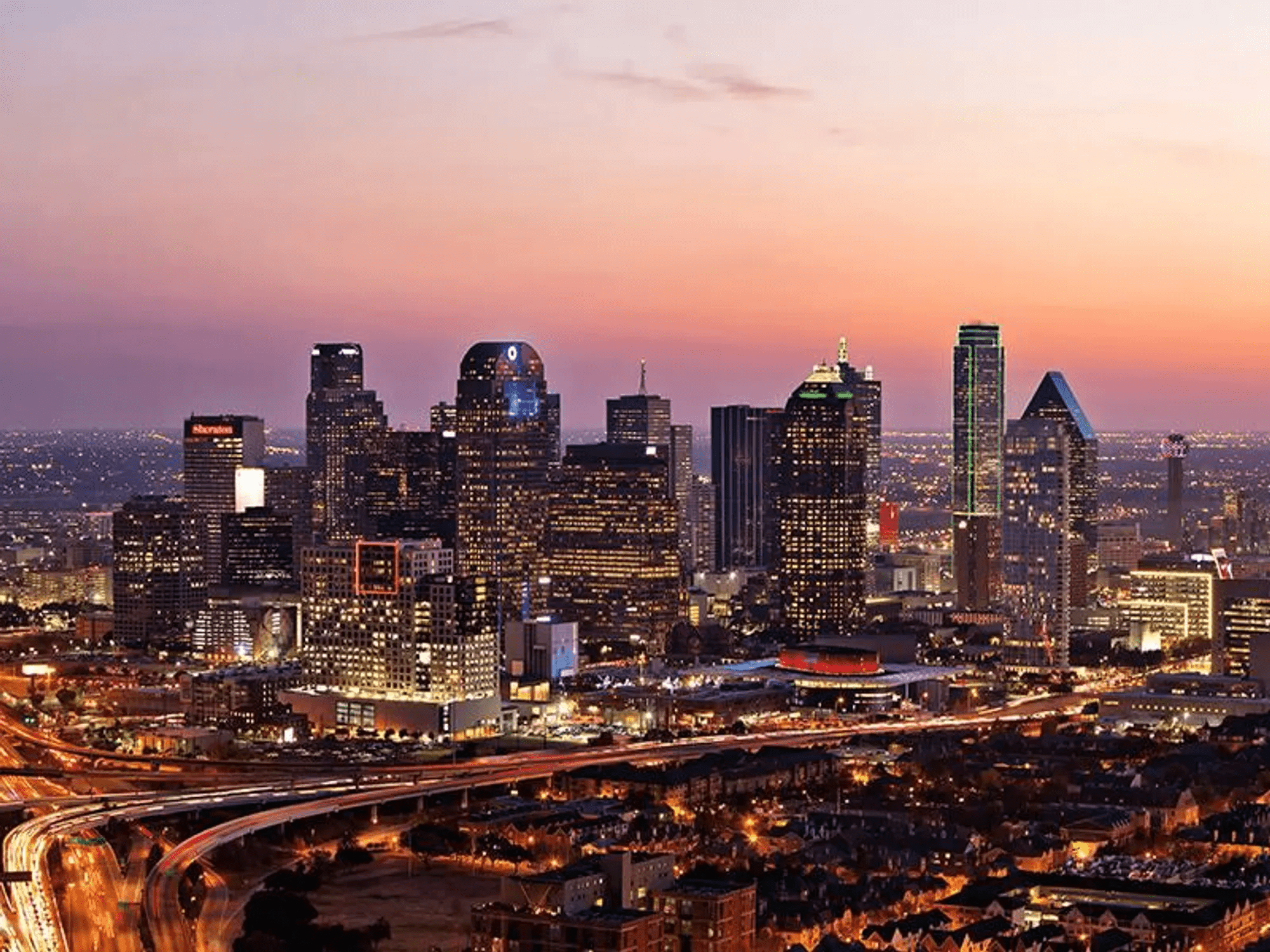
For Dallas—a dynamic metropolis in the heart of sunny and often arid Texas—water and energy are strategic assets. Their management has officially moved under the control of automated systems operating with Swiss-watch precision.
Professional resource monitoring has become possible through the deployment of next-generation smart meters. These devices can identify abnormal pressure drops or specific vibrations indicating micro-cracks in underground utilities. This allows utility services to perform targeted repairs early, preventing massive failures and saving millions of gallons of scarce water annually.
Simultaneously, the city is actively building a defense system against natural challenges. In critical zones near the Trinity River and atop new deck parks, a comprehensive flood control network has been established. High-precision sensors track water levels in real time. In the event of critical readings, the system alerts rescue services and integrates with the Smart Node city transport network to automatically reroute traffic and block dangerous road sections.
Future Mobility: Barrier-Free Transportation
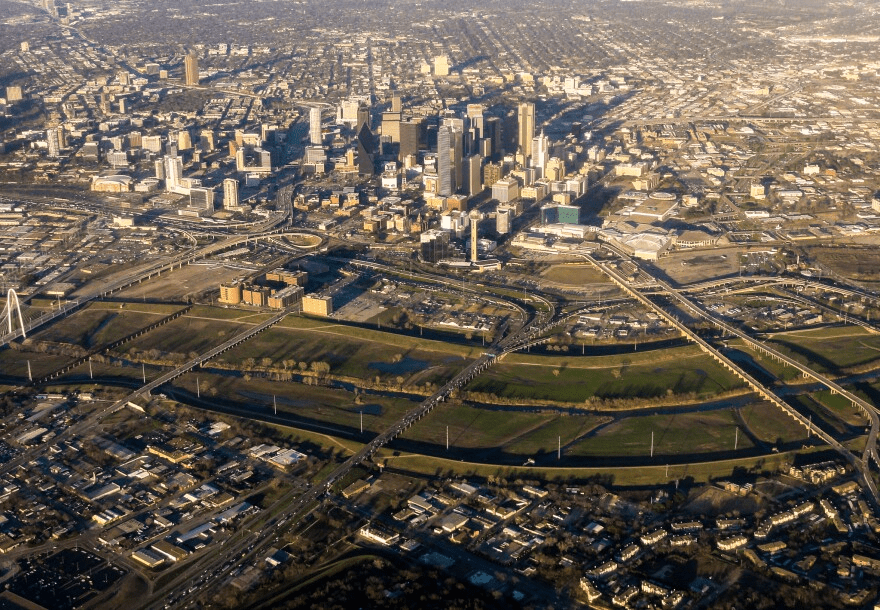
The Dallas transportation system actively utilizes big data to create a seamless logistical environment.
- Adaptive Traffic. Traffic lights in business hubs can adjust phases based on real-time vehicle density, reducing congestion and emissions.
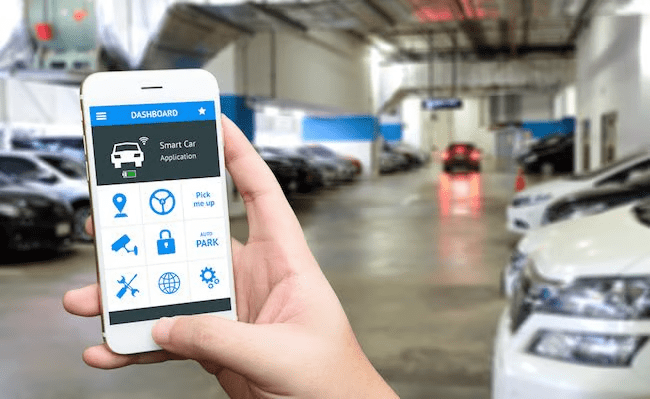
- Smart Parking. Navigation systems guide drivers directly to vacant, sensor-equipped parking spots.
- Micromobility. Electric scooter and bike stations are integrated into pedestrian zones and parks.
Efficiency of Smart Solutions in the Urban Environment
| Technology | Impact on Resources | Social Effect |
| IoT Lighting | Significant energy reduction | Enhanced street safety |
| AI Analytics | Rapid incident response | Lower crime rates |
| Smart Irrigation | Water usage optimization | Park ecosystem preservation |
| Connected Infra | Economic attractiveness | Attracting tech talent |
Sources:
- https://dallasinnovates.com/see-how-the-dallas-international-district-is-taking-shape-from-a-people-mover-to-a-20-acre-park-to-smart-cities-tech-and-more/
- https://www.papercitymag.com/real-estate/dallas-smart-district-tallest-high-tech-skyscrapers-amazon-headquarters/
- https://dallasinnovates.com/high-tech-park-from-ny-high-line-designer-coming-to-dallas-west-end/
- https://medium.com/@najjar.reem/dallas-innovation-district-the-beginning-of-a-smart-city-3ee0e7df3cd2

